Erika Lynn Adams
Contact me!
  • Home
  • The Tale Collector's Blog
    • Books, Graphic Novels, and Other Works of Literature
    • Movies, Short Films, and Other Works of Cinema
    • Video Games, Simulations, and Other Interactive Experiences
    • TV Shows, Web Series, and Other Narrative Programs
    • Music, Bands, and Other Creations of Sound
    • Adaptations, Retellings, and Old Tales in New Light
  • Interviews, Readings, and More!
  • News (Updated 11/9/25)
  • Biography

Virtual Vengeance

7/4/2025

0 Comments

 
Picture
Picture
Picture
Picture
#79 - Unfriended
2014, Rated R

Gather round and I’ll tell you the tale of six teens whose depraved secrets are brought to light by a grudge-bearing internet user.
(7/4/25)

​​
The following recording is edited from its original 15-minute version due to copyright restrictions. To hear the full version, tune in or stream at the scheduled times on ktwh.org, or download on AudioPort.
WARNING: THIS STORY DEALS WITH MATURE TOPICS LIKE CYBERBULLYING AND TEEN SUICIDE. LISTENER/RESEARCHER DISCRETION IS ADVISED.
 
Looking back, I consider myself lucky when it comes to my high school years. My parents, though busy, were as supportive as possible; I had good friends who never took advantage of me; and I was so focused on my grades that I simply couldn’t be bothered to look for trouble. Now, this could be my age talking—I graduated in 2005—but whenever I hear true stories of teen bullying and/or suicide, I find myself thinking, “Are actual teenagers really this stupidly cruel to each other?” I mean, cheesy Nickelodeon sitcoms, melodramatic soap operas, and raunchy slasher flicks are one thing, but serious real-life news reports? I think another factor in my relatively smooth high school career was that I didn’t grow up with social media. Which begs the question: had I started school just ten years later than I did, would I have been exposed to cyberbullying and the plethora of other dangers posed by Facebook, Instagram, and the like? Not gonna lie, the thought makes me shudder—much more than this movie does, as chilling as it already is.
 
In 2013, high-schooler Laura Barns was recorded passing out drunk in her own waste at a wild, unsupervised party. The video was then uploaded. Unable to bare the shame which followed online and off, Laura took her own life. One evening a year later, her former best friend Blaire Lily is Skype-chatting with her boyfriend Mitch, and their friends Adam, Jess, Ken, and Val, along with an uninvited user named “billie227”—whose account apparently belongs to the deceased Laura. But whoever “billie227” really is, she is no mere internet troll. Not only does she harass and threaten the increasingly hysterical teens, countering every computer move they make with uncanny technological skill, she knows all of their deepest, darkest secrets—including who shot and uploaded the video that destroyed Laura. Forced to play a lethal variation of the drinking game, “Never Have I Ever,” Blaire and her friends find themselves helpless to stop the supernatural hacker from destroying their lives in turn . . . both social and mortal.
 
Originally titled Offline and Cybernatural before its wide release, Unfriended has often been compared to The Blair Witch Project in that it, too, popularized a unique cinematic format--Screenlife—despite being neither the first nor the most commercially successful of its kind. Like the deliberately unrefined look of the Found Footage sub-genre of Blair Witch, Screenlife presents a story entirely via computer screen in real time, gaining popularity with the advent of increasing internet use in the 2010’s.
 
By the way: Blair Witch, Blaire Lily? Connection?
 
Director Levan Gabriadze’s interest in this project came partly from his childhood in Soviet Georgia, during which he himself was bullied, as well as his thoughts on how the nature of bullying has changed over time. The idea, he says, that he could have grown up with the internet and been subjected to such torment 24/7, as opposed to just a relative few short times a day, is a frightening one, to say the least.
 
KEN: (Self-importantly) In Val’s defense, her comment wasn’t completely unwarranted, okay? Nobody wants to talk about it, but I’ll give you the Ken-pinion. Laura f***ing sucked. She was a big bully, okay, and she deserved all the s*** she got from that video.
 
This being the only Screenlife film I’ve seen as of writing, Unfriended has proven to be an excellent tutorial on the subject. Some of the best horror films ever made are those in which we see less rather than more: Everything is presented entirely through Blaire’s MacBook screen. Unlike a regular video camera, a computer is more cumbersome to carry, has no specialized capture features, and just is plain finicky at the best of times. Glitches abound as pixels and audio can’t always keep up with quick movements, obscuring transmissions while creating an uncanny atmosphere in which you start to question what you’re actually seeing. Plus, it is refreshing to get that nice, creepy amateur look without the headache-inducing, stomach-churning hassle of shaking cameras. As a side note, I absolutely LOVE how the filmmakers similarly distorted the opening Universal Pictures production logo; not as subtle as the Ring franchise’s artistic VHS graininess of the Dreamworks and Paramount logos, of course, but hey, since when have teen slashers been known for subtlety? ;)
 
That we see almost nothing beyond the teens’ faces increases the feeling of claustrophobic helplessness. This aspect ties in well with their significant, albeit obvious, social media addiction. In their desperation they think that by staying online they are staying connected, when in reality they are just making themselves easier targets. Seriously, turning to Chatroulette for help when someone’s literally dying? Even by hilariously dumb movie teen standards, who does that? And where are the parents anyway? Is there really no one around in any one of the teens’ houses to hear the carnage happening?
 
(A desperate and terrified Blaire comes across two guys on Chatroulette, Dank Jimmy and Rando Pauls, getting high.)
 
BLAIRE: (Screams) Hi!
RANDO: (Completely at ease) Hi. You want some?
BLAIRE: Hey, guys! Hello!
DANK: (Equally happy) Hi.
BLAIRE: Can you hear me?
RANDO: Hey.
BLAIRE: (In terror) Something is happening . . .
RANDO: (Languidly repeating) Something is happening.
DANK: Can I tell you . . . It’s happening right now.
BLAIRE: Hey! Just . . . I am being attacked!
DANK: She’s saying . . .
BLAIRE: (Screams) I need you to call the police!
RANDO: (Still smiling) Shut up! She’s being attacked!
BLAIRE: Please. Police, yes, the police.
DANK: (Making no move) We’re gonna call the police.
BLAIRE: I will do anything you want. Dial the Fresno, California . . .
DANK: (Playfully) Police. Please call them. Police!
BLAIRE: (Angrily) Stop being p*****!
 
(The duo abruptly log off; we next see a large man’s exposed belly on the chat screen.)
 
BLAIRE: (Beside herself) Oh, God!
 
Which brings me to some other contextual issues I’ve noticed upon subsequent viewings, several of which revolve around Blaire herself. Before we even know what she looks like, she kicks off the story by watching Laura’s infamous suicide video. Now I know that young spectators who record first and help later are a tragic reality, but who except the most callous and detached watches a suicide video of a best friend, without so much as an emotional peep? Moreover, several times when Blaire is typing private conversations, she never actively mutes her friends. Instead, they have a way of conveniently muffling themselves, apparently so Blaire can concentrate on checking over her messages for several unnecessary seconds before sending, and hovering her cursor over links for several more unnecessary seconds before clicking, all so that the audience has ample time to read over her shoulder, so to speak, which is pretty much as exciting as it sounds. Yet one of the most glaring by far is when Blaire—a tech-savvy millennial of the 2010’s—asks her friends what an internet troll is. Moments like these are on par with “As you know” and other lazy, info-dumping tropes. They may help get the audience up to speed and move the story along, but at the expense of natural story progression and world-immersion.
 
KEN: Yo, so I talked to Kyle about Friday. And I got the weed, but he’s out of Molly. So . . .
(All conversation fades out as Blaire chats privately with Mitch.)
 
[. . .]
 
KEN: It’s probably just, like, a troll or something.
BLAIRE: What is a troll?
KEN: An internet troll?
VAL: How do you not know what a troll is?
MITCH: Like, someone that just harasses people online.
KEN: They just wanna get reactions out of people.
 
Yet there is some good meat to be found on these technological bones. I’ve mentioned in the past that teen slasher flicks aren’t my cinematic cup of tea, due in large part to most of the potential victims having more hormones and narcissism than brain cells and empathy, and these guys are no exception. But again, the Screenlife format helps. The intimacy of the single location recording lets us really see their personalities, relationships, and quirks, based solely on the dialogue, actions, and possessions shown upfront, like Jess using a flat iron and other makeup items, Val shouting at her yapping dog, Ken blending salsa in his bedroom, Adam acting macho with his loaded handgun, and Blaire being turned on by Mitch’s kinky threats with his butcher knife:
 
MITCH: (Brandishes his knife right in front of his screen) Take that shirt off before I cut it off.
BLAIRE: (Seriously) That’s really violent.
MITCH: (Just as serious) Take the shirt off, or I’ll cut it off.
(They both lighten up and laugh; Blaire sits up and starts to comply.)
BLAIRE: Hey, that worked.
MITCH: (With satisfaction) That does it for you? All right. [. . .] It’s just getting good.
BLAIRE: Get the knife. (Leans into the screen and repeats seductively) Get the knife, baby.
 
But hands down, it is Billie who steals the show without a single natural spoken word. A major production highlight is how the filmmakers, in seamless real time, incorporate faults and errors that in fully functioning devices shouldn’t be possible. Billie’s mechanical flexes alone run the group ragged, from making “hang up” or “close” options disappear to imitating a very creepy 911 dispatcher:
 
“911 DISPATCHER”: Where are you right now, sir?
ADAM: Um, I’m at home. Online, with my friends.
“911 DISPATCHER”: Are you safe?
ADAM: Yeah.
“911 DISPATCHER”: All of you?
ADAM: Yeah, we’re good.
“911 DISPATCHER”: Even Ken?
ADAM: (Caught off guard) What?
“911 DISPATCHER”: (Suddenly ominous) Don’t hang up.
ADAM: (Confused) What?
JESS: What just happened?
ADAM: (Holds up a shushing finger) Shh! Shh!
“911 DISPATCHER”: (Threateningly) I said, “Don’t hang up.”
 
Her wicked sense of humor truly shines once the drinking-turned-dying game begins. Bit by bit she strips each teen naked, exposing the cruelties the so-called friends have committed against each other behind their backs. Sort of like the best—or worst—reality TV, one can’t help but keep watching the relentless onslaught of cold, harsh truth, just so one can squirm with depraved delight at the participants’ priceless heated reactions:
 
BILLE227: Never have I ever STARTED THE RUMOR THAT BLAIRE HAS AN EATING DISORDER (Starts a countdown)
BLAIRE: Who did that?
ADAM: (Annoyed) Wasn’t f***ing me.
JESS: Okay, f***, it was me, okay?
(A buzzer sounds)
BILLIE227: Jess – finger down
BLARIE: (Taken aback) You said it was Val.
JESS: (Frustrated) Okay, I lied, all right?
BLAIRE: (Stammers) You . . .
JESS: It’s not like there’s not some kind of truth in there!
BLAIRE: (Hurt) Jess, what are you doing?
JESS: Dude, it’s not my fault!
BLAIRE: Why are you doing that to me?
JESS: You’re the one who’s like, “I’m not hungry, I already ate.”
 
[. . .]
 
BILLIE227: Never have I ever SOLD OUT ADAM TO THE COPS FOR SELLING WEED (Starts a countdown)
ADAM: (Shocked) What? No, no, please tell me he’s lying, Jess, you f***ing b****!
JESS: F*** you. It wasn’t me, okay?
MITCH: Shut up. Shut up! It was me, man. Hey, it was me.
(A buzzer sounds)
ADAM: (Thunderstruck) It was you?
MITCH: I’m sorry. Yeah?
ADAM: What? Why?
MITCH: (Irritated) What do you mean, “What? Why?” Does it really f***ing matter?
ADAM: (With outraged fury) Yeah, it does to me, Mitch! They put me in f***ing handcuffs, man!
BLAIRE: Guys, stop it!
ADAM: I almost had a record! My f***ing dad almost disowned me for that!
MITCH: Dude, it was gonna be both of us or one of us, and I would do the same s*** for you.
ADAM: (Irate) So let me take the rap, huh?
BLAIRE: Hey, it doesn’t matter!
MITCH: It doesn’t matter! Exactly, it doesn’t matter!
ADAM: (With venomous sarcasm) Yeah? Oh, my f***ing hero, Mitch.
BLAIRE: Hey! Knock it off!
ADAM: My hero!
 
Even better, I can almost see Billie savoring her sweet, sweet revenge via the specific ways she targets the teens and rubs their tragedy and heartbreak in their faces. Notable examples include showing a fake Adult Entertainment pop-up ad featuring a prior recording of Blaire teasingly unbuttoning her shirt, over a backdrop of the real Blaire and her remaining friends’ distraught weeping at the sudden death of one of their number:
 
BLAIRE: I’m sorry, Jess!
JESS: You killed him!
(Both girls cry unconsolably)
BLAIRE: I didn’t know what to do.
(An obnoxious pop-up ad suddenly appears starts playing)
MALE AUTOMATED VOICE: (Cheerfully) Hello. Can I share a secret with you? It’s just three words: FREE. LIVE. CAMS. Free live cams are the absolute best. (Shows shots of women in the process of removing their clothes—one of whom is Blaire) Having beautiful women all over the Internet just waiting to fulfill your every desire. There’s simply nothing better than that.
 
And playing the Connie Conway song “My, How You Lie, Lie, Lie,” on full blast with Blaire unable to mute it, while the other teens bicker and curse at each other for their exposed betrayals, all in a brilliant display of deceptively cheerful juxtaposition.
 
And yet, though it all, they each deny responsibility or make excuses to justify their heinous actions. And considering the chameleonic ease with which they lie and cheat and backstab each other for their own pleasure or gain, I think in this case at least, we can place only so much blame on social media.
 
BLAIRE: (Crying hysterically as a scandalous video of her plays for everyone to see) Why is this happening? Why are you showing this? Mitchie, don’t watch! Just don’t watch, okay? [. . .] It didn’t . . . Baby, it didn’t mean anything. I love you. (She minimizes and moves the video, showing Mitch staring at the screen with numb, teary eyes.) Stop watching. Look at me, Mitch. Mitch, look at me! I didn’t mean it.
 
In any other movie, these kids would be the heroes, flaws notwithstanding; Blaire, I dare say, is set up to be the quintessential Final Girl. But they’re also just as dumb and conceited as any slasher victim of old, just as likely to go off in search of their next and/or final drunken orgy in the woods. That said, Unfriended’s confined set-up not only necessitates and executes more creativity regarding character interactions as well as kills, it provides obvious but still significant commentary on young people’s abuse of each other via the internet. Instead of the attractive youths being hindered by a lack of technology with which to call for help, here it’s the abundance and over-reliance on it which proves fatal. Seriously, everyone, think twice before you start slandering online, lest the consequences bleed into your reality—literally.
 
CREDITS:
Special thanks to KTWH 99.5 Two Harbors Community Radio. All images, audio, and links belong to their respective owners; no copyright infringement is intended.
 
MAIN THEME:
“The Call” - Briand Morrison and Roxann Berglund

https://www.briandmorrison.com/

https://www.facebook.com/BriandMorrisonGuitar/
https://www.youtube.com/user/briandmorrison​​​​

EPISODE SONG:
“Cyber Criminals” - Alex Nelson


https://www.facebook.com/alex.j.nelson.7
All other music and sound clips are from Unfriended (directed by Levan Gabriadze; production by Bazelevs Company and Blumhouse Productions; distributed by Universal Pictures).
 
OST SONG:
“My, How You Lie, Lie, Lie” - Connie Conway

Download the full 15-minute episode here!

Unfriended on Wikipedia

Levan Gabriadze on Wikipedia

The sequel, Unfriended: Dark Web, on Wikipedia

Unfriended 's Official Website

Unfriended on IMDb

Unfriended on Rotten Tomatoes

Unfriended on Metacritic

Unfriended on Common Sense Media

Unfriended on Tv Tropes

Unfriended at Barnes & Noble

Unfriended on Amazon

Unfriended on eBay

​^^ Back to Movies, Short Films, and Other Works of Cinema
0 Comments

Cosmic Concert

3/7/2025

0 Comments

 
Picture
#77 - Interstella 5555
2003, Ages 13 and Up

Gather round and I’ll tell you the tale of an alien music group who must escape the clutches of an evil tech wizard.
(3/7/25)

​
The following recording is edited from its original 15-minute version due to copyright restrictions. To hear the full version, tune in or stream at the scheduled times on ktwh.org, or download on AudioPort.
When I heard that Daft Punk was retiring in 2021, my heart ached a little, as I harbor very fond memories of my phase with the French electronic duo. I remember when I first heard their famous hit, “One More Time,” on the radio; admittedly, though I liked it, my mind wasn’t exactly blown, not at first. But then came the night of my 9th grade Homecoming dance—my favorite of the four I attended because I heard more than just Rap the entire night. Also, unlike the dances of my sophomore, junior and senior years, at this one they set up a screen on the gymnasium wall on which music videos of the songs played were projected. One of these was the aforementioned Daft Punk song, whose video I now saw with surprised delight was an anime. Even better, as Toonami Midnight Run: Special Edition later confirmed, it was no stand-alone short. Now my mind was blown.
 
On a distant planet in another galaxy, a race of peaceful, blue-skinned humanoids enjoys a concert performed by their local pop group, comprised of Octave, the smooth-singing lead vocalist and keyboardist; Stella, the kind and lovely female bassist; strong-willed guitarist, Arpegius; and comical, short-statured drummer, Baryl. The tower guards also listen in with great pleasure from their post—not realizing until it’s much too late that their planet is being invaded. The crowd is knocked out and the quartet kidnapped, but not before a desperate SOS is sent out to Shep, a brave space pilot out on patrol. Determined to rescue the band (particularly Stella), he follows the invading ship through a wormhole all the way to planet Earth. There, the helpless four are transformed physically and mentally into humans by the evil Earl de Darkwood, who forces them to perform as the hottest new music sensation, the Crescendolls, for his own nefarious purposes. With Shep’s help, Octave, Stella, Arpegius, and Baryl must find a way to restore their memories and their forms in order to stop Darkwood from using them and their music to realize his insane dream of universal conquest.
 
In the process of recording their second studio album, 2001’s Discovery, and considering ideas for the tracks’ music videos, Thomas Bangalter and Guy-Manuel de Homem-Christo—known collectively as Daft Punk—decided they wanted to create an accompanying film which would blend sci-fi with entertainment industry culture. Eventually settling on the format of animation, the duo recalled their childhood love of anime, especially that of legendary Japanese manga artist, Leiji Matsumoto, one of their favorites being his acclaimed 1978 space opera series, Space Pirate Captain Harlock. Through a connection with music company Toshiba EMI (now EMI Music Japan, Inc.), Daft Punk was introduced to Toei Animation in Tokyo, where they at last got to meet their hero in person in hopes of a collaboration. Matsumoto, for his part, was touched by the duo’s praise of his work, not to mention fascinated by the robot disguises they were known to don in public. He himself had been greatly inspired by French films and had a wish of his own to create a piece of animation set to his other great love, music, living by the belief that “musicians are magicians.” Needless to say, he was more than happy to join the animation team as visual supervisor. The result was Interstella 5555 (that’s “four-five” as opposed to “five-five-five-five” or “quadruple-five,” likely as an homage to another famous work of Matsumoto’s, Galaxy Express 999, pronounced “three-nine,” as opposed to “nine-nine-nine” or “triple-nine”).
 
Funny side note: I see this movie as sort of a reversal of The Beatles’ Yellow Submarine: the blue music-loving creatures in this Pepperland-like paradise equally praise their futuristic equivalent to Sgt. Pepper’s Lonely Hearts Club Band, while the human Darkwood and his followers make the music-hating Chief Blue Meanie and his minions look like Gru and his Minions. Somehow, I think I’d rather endure Chief’s bleak utter silence than Darkwood’s warping of music for evil.
 
The film is presented much like Walt Disney’s Fantasia: a compilation of short films whose events are portrayed through music and visuals alone. But instead of a batch of unrelated pieces with wildly differing plots and tones all strung together, here we have the official music videos of all fourteen of Discovery’s tracks in chronological order, each one a separate episode which makes up part of a sort of hour-long miniseries. Though there is no dialogue, sometimes a character will be seen “singing” via the tracks, like when Octave is vocalizing the lyrics performed by American DJ and singer, Romanthony, while the film’s band is “playing” “One More Time,” or when Shep is jamming to Daft Punk’s own vocals of “Digital Love” while cleaning his ship (and fantasizing about Stella) in outer space.
 
While this is an innovative format for a feature film, I imagine that anyone watching the individual videos for the first time and out of order may feel confusion due to a lack of context, like starting an unfamiliar movie or show at the halfway point. The only video I think feels the most complete on its own story-wise is “Harder, Better, Faster, Stronger,” during which we see the unconscious band’s transformation process inside Darkwood’s underground science facility.
 
There is a minimal, but frankly, distracting, use of sound effects. This isn’t quite so bad when it’s done during silent intervals between songs, like the evening rainfall preceding “Nightvision,” but rather than enhancing a tone of some scenes as clearly intended, I find them jarring and annoying when right in the middle of a track I’m trying to listen to, like the car crash toward the end of “Superheroes” or the thunder storm in “Veridis Quo.” Mussorgsky got Chernabog’s point across quite clearly without sound effects, thank you very much!
 
Speaking of distraction, I wasn’t very familiar with Matsumoto’s work when I first saw this movie. But having since watched Harlock and Galaxy Express, along with early aughts’ miniseries like Cosmo Warrior Zero and Gun Frontier, his distinctive character designs—from his tall, slender ladies to his wide-mouthed, beady-eyed boys—make it near impossible for me now not to think of some of his most iconic characters here, Stella and Beryl, for instance, being dead ringers for Maetel and Tochiro, respectively. In a much more subtle example of intriguing character design, I believe the four humanized bandmates each represent a specific music genre. Now I don’t pretend to be an expert on the subject so please feel free to correct me if I’m wrong, but the idea came to me after putting together the Earthly attire and the fake member bios shown on TV for the human fans. Stella represents Country, being “from Memphis” and dressed in a slim, tasseled jacket, miniskirt, and cowgirl boots; Arpegius represents Rock, being “from London” and sporting a torn-sleeved shirt, studded wrist bands, skinny black jeans, and sneakers; Baryl was harder for me to determine and this might be a bit of a stretch, but I’d guess that he represents Metal, being “from Munich” and wearing ragged clothes, a neck towel, fingerless gloves, and combat boots; and Octave represents Funk, being “from Brooklyn” and looking sharp in a Motown-era frilled shirt, jacket, and bell-bottoms straight from the Jackson Five.
 
Along with a mutual love and clear respect of science fiction on their parts, I think what makes this collaboration work is that Daft Punk’s initial concept of overcoming oppression and rebelling against an overly mechanized existence is one that Matsumoto often featured in his own stories. This idea is portrayed surprisingly well in the literal down-to-earth setting of the rich and glamorous but brutal profit-driven music industry. “One More Time” establishes the happiness the bandmates feel as they play for themselves and their people, via the song’s optimistic lyrics and jubilant tune and the bliss plain on their faces. Compare that to “Crescendolls”: the band, now humanized and brainwashed by Darkwood, is dragged from gig to gig, their expressions blank and lifeless despite their skyrocketing worldwide fame, all to the song’s constant background shouts and frenetic beat. This is followed by “Nightvision,” somehow both relaxing and sad at the same time, in which the group, even in a lush hotel room, move as if drunk or dying, as they’re forced to autograph countless pieces of merch without respite. However, the final track, “Too Long,” whose lyrics speak of freedom of mind and spirit after a long time without, shows a segment in which the band, safe and reformed but exhausted after their harrowing experience, gradually find their groove again, their sincere and relaxed music-making in a small but comfortable room gaining traction along with the song itself.
 
I think enjoyment of this film is going to depend largely on the viewer’s taste regarding not only Japanese animation and science fiction, but Daft Punk music and electronic music in general. Clocking in at sixty-five minutes, you’ll effectively be hearing the entirety of Daft Punk’s Discovery album from start to finish with no breaks between songs, which may or may not be your cup of tea regardless of the fantastic and exciting visual story going with it. Still, I think it’s always a beautiful thing when two masters of vastly different crafts come together like a classic anime mech of old to create a whole new duet for both the eye and the ear.
 
CREDITS:
Special thanks to KTWH 99.5 Two Harbors Community Radio. All images, audio, and links belong to their respective owners; no copyright infringement is intended.

MAIN THEME:
“The Call” - Briand Morrison and Roxann Berglund

https://www.briandmorrison.com/

https://www.facebook.com/BriandMorrisonGuitar/
https://www.youtube.com/user/briandmorrison​​​​

EPISODE SONG:
“Alien Pulse” - Alex Nelson

https://www.facebook.com/alex.j.nelson.7

All other music and sound clips are from Interstella 5555: The 5tory of the 5ecret 5tar 5ystem (directed by Kazuhisa Takenouchi; production by Toei Animation, Daft Life Ltd., Wild Bunch, and BAC Films; distributed by EMI/Virgin Records).

OST SONGS (all by Daft Punk, from Discovery [2001]):
“One More Time”
“Aerodynamic”
“Digital Love”
“Harder, Better, Faster, Stronger”
“Crescendolls”
“Nightvision”
“Superheroes”
“High Life”
“Too Long”

Download the full 15-minute episode here!

Interstella 5555 on Wikipedia

Leiji Matsumoto on Wikipedia

Daft Punk on Wikipedia

Interview with Daft Punk and Leiji Matsumoto

Interstella 5555 on IMDb

Interstella 5555 on Rotten Tomatoes

Interstella 5555  on Tv Tropes


Interstella 5555 at Barnes & Noble

Interstella 5555  on Amazon

Interstella 5555 on eBay

​^^ Back to Movies, Short Films, and Other Works of Cinema
0 Comments

From All Loves of Life

11/3/2023

0 Comments

 
Picture
Picture
Picture
Picture
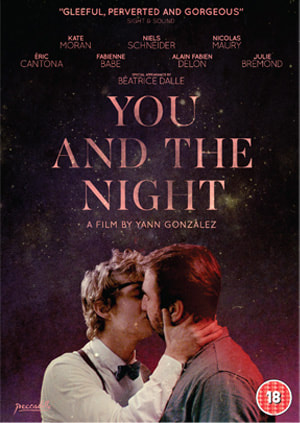
#75 - You and the Night
2013, MATURE AUDIENCES ONLY

Gather round and I’ll tell you the tale of a group of strangers who come together for a night of lovemaking, storytelling, and spiritual revelations.
(11/3/23)

​​
The following recording is edited from its original 15-minute version due to copyright restrictions. To hear the full version, tune in or stream at the scheduled times on ktwh.org, or download on AudioPort.
WARNING: THIS STORY CONTAINS GRAPHIC NUDITY AND SEXUAL CONTENT. LISTENER/RESEARCHER DISCRETION IS ADVISED.
 
Upon discovering and enjoying the French electronic band M83, I decided to learn more about it. Among other things, I found out that its creator and lead singer, Anthony Gonzalez, not only has a brother, but that brother, Yann Gonzalaz, had made a movie, its soundtrack composed by none other than the very band I was researching. But my excited curiosity cooled more than a bit when I learned it was an Erotic film. Paradoxically, I think my own personal awkwardness with regards to real-world sex played a role in my decision to watch this movie, so that I could try to approach and discuss the topic with more honesty and respect, in fiction if nothing else. That I succeeded in watching from start to finish was only one surprise.
 
On a bitter cold evening in France, preparations for a private party are underway. The three hosts are pansexual couple Ali and Matthias, and their transvestite maid and mutual lover, Udo. They have invited a select group of individuals—none of whom any of them have ever met before—to their home for a night of lustful pleasures and intimate reveries. But there is an undercurrent of misgiving between the trio that threatens to ruin more than just the mood. Nevertheless, one by one, the four guests arrive: the Stud, the Slut, the Teen, and the Star. As the extraordinary and unbelievable histories of each participant come to light, their realities gradually give way to fantasies and desires more awe-inspiring than anything they’ve ever experienced, until each must decide how to face the aftermath when the night comes to its inevitable end.
 
My second surprise regarding You and the Night? For a movie with this kind of premise and officially in the Erotic category, it wasn’t nearly as graphic as I was expecting. Heck, it has a lot more making out than genital exposure or literal intercourse. I have to admit, though, a very small part of me was relieved in a way. Now, this doesn’t come from any prudishness. I treat fictional sex the same way I do fictional violence; I don’t mind a copious amount as long as it means something in the story. And Gonzalez, for better or worse, really does his best to make the eroticism here mean something.
 
I think this lack of gratuitousness has much to do with the plot’s similarity to John Hughes’ The Breakfast Club. On the surface, you have a group of very different individuals who normally wouldn’t meet under ordinary circumstances, spending almost the entirety of the movie in a single place baring their souls in between messing around with each other, and ultimately finding empathy and common ground with one another. Going deeper, though, it’s as if Gonzalez wants to show sensuality in a more sacred light in a situation that could have easily become flat-out pornographic. I’m particularly impressed with the compassion the participants have for their sexual partners. A masterful illustration of this occurs upon Star’s arrival. Standing at the door, she agrees to enter and join only if everyone makes love to her in complete darkness. They all comply—until Slut arrogantly turns the lights back on, sending Star into a fit of despair. This is not a woman acting vain or a bit of kinky fun being ruined. The others are genuinely angry and disappointed that their fellow lover’s trust has been betrayed in such an insensitive manner, as expressed by Stud giving Slut a hard slap to the face.
 
(The lights come on abruptly; Star screams and rushes to the door but finds it locked.)
STAR: (In pure anguish) Everything is ruined. Let me go!
STUT: (Casually, as Star rushes to the other side of the room with her face obscured) No way. I’m far too curious for that. (Playfully jangling a set of keys) And I hate making love in the dark.
(Everyone looks at Slut with a mixture of dejection and resentment)
MATTHIAS: (Shaking his head with a snort of disgust) Idiot!
STUD: (Marches resolutely past the others up to Slut at smacks her in the face; she stares up at him in shock)
 
Each guest harbors a deep insecurity due to being “labeled” according to a societal stereotype, yet the fact that they never reveal their real names and are thus credited as said labels is intriguing. Each “name” represents a distinct aspect of the character’s sexuality and/or sexual preference, while also signifying their imprisonment in what is otherwise a highly liberating activity.
 
Stud is a kindhearted middle-aged man who is exceptionally well-endowed, attracting a very generous number of lovers, while also losing his real true love: poetry.
 
STUD: The whole town knew. I felt like a circus freak. Worst of all, I loved it. I felt powerful. Irresistible. My [manhood] became my obsession. I forgot poetry. I adore my [manhood]. [. . .] But sometimes I feel it’s not the real me. I’m a poet. An artist. I curse the [organ] that has torn me from my destiny.
 
Slut, a tough twenty-four-year-old, has a near-insatiable sexual appetite stemming from repressed grief and sad dreams of her deceased mother.
 
(We see Slut’s dream in which she is wandering through vast hallways filled with naked bodies; she comes across a nude female torso—presumably that of her mother—and embraces it)
SLUT: This scent . . . Mom? Is it you?
VOICE: My darling . . . I’ve missed you so much.
SLUT: (Rubbing her face in her mother’s breast like a child) Mommy . . . my sweet mommy.
 
Teen is a reticent young runaway, dissatisfied at home after being, as he puts it, called to the night, exchanging sexual favors for survival and preferring to learn about life and love on the streets.
 
TEEN: [. . .] I feel I’m meant to follow a solitary path. I’m propelled by a force I can’t define. Something like the night. Its encounters, its inhabitants. I quit school two months ago. But in the drink of a drunk, I learn. In the rage of a switchblade, I learn. Then there’s sex. I love sex and its creatures. I love those who do it, at night . . . [. . .] When only vampires and lunatics lurk.
 
Star, the oldest and most painfully self-conscious about her age and appearance, is seeking her lost son, with whom, against all laws above and below, she fell deeply in love.
 
STUD: Who is he?
STAR: It’s him. My heart. The love of my life. My son. I left everything for him. [. . .] For months, it continued. We were so close, dying to touch, but never daring. Each day ended with the same prayer.
 
Proper and improper names aside, the same unease applies to the hosts. Ali is haunted by dreams of a mysterious, faceless lover, and Matthias has not only grown increasingly weary of these parties, but is also torn between his desire for Ali’s happiness and his jealousy of all the lovers she takes. Their passion and devotion to each other aren’t lacking, yet it seems to be that same passion and devotion shared with others, indeed, their very pansexuality, which poses a threat to their relationship.
 
MATTHIAS: (Trembling) I don’t want to die. I’m afraid of leaving you alone.
ALI: (Trying to reassure him) Everything will be fine. Tonight, you’ll regain your strength. Your color.
MATTHIAS: (Turning away) But for how long? I’ve had it with these parties. All these people you give yourself to.
ALI: (Serious) Matthias . . . promise me you won’t be jealous this time. You know . . . you always want to stay. But you don’t have to.
MATTHIAS: I enjoy seeing you so happy.
ALI: You’re the one I love. I will always love you.
MATTHIAS: (Sighs) “Always” is a bore. A dead bore. “Now” is what matters. Tell me.
 
Udo is the loyal and devoted glue that helps keep the couple together, the impish “servant” who keeps the fun going, and the wise protector of the sanctity of love. Beneath her flirtatious dialogue and seductive manner is a deep respect and understanding of the heart, its emotions, its desires, its pains. Though she, too, wants to reap all the benefits of this and any other orgy, it is never at the expense of her partners’ own pleasure.
 
SLUT: (Her arms lazily on Stud’s shoulders) Wanna show us the goods?
UDO: Patience. (Turning the music off) We have plenty of time. Someone’s still coming. (Crossing her arms in subtle disapproval) Can’t we get to know each other? Ever heard of class?
 
[. . .]
 
ALI: (Miserable) I have nothing to offer.
UDO: (Perceptively) You have more than you know. Before the war, I observed you and Matthias. I’ve never known a more luminous, intoxicating couple. [. . .] You will have eternal life, like me. Together we will reap the pleasures of youth.
ALI: (In wonder) You’re like Jesus.
UDO: (Almost carelessly) Yes, only worse.
 
Not unlike The Breakfast Club, which I feel could easily be enacted on stage, You and the Night as a surreal play-like feel to it, not only because of the deliberate character typecasts and romantic dialogue, but because of how the characters’ stories, when shown on screen, feature enclosed spaces, fake-looking “props,” and “extras” with exaggerated personalities, and require a great suspension of disbelief from both the in-film audience and the real audience. The most telling example is Ali and Matthias’ story. Without delving into spoilers, their supposed history is nothing short of a fairy tale, complete with impossible odds and love conquering all. But belief or disbelief in these stories isn’t the point. The point is escape from dull and treacherous reality. Everyone in their own way seems desperate not to destroy the safe, comforting, and magical illusion they’ve created inside the bubble of the apartment, held together only by their nonjudgmental views and boundless imagination.
 
STAR: (Irritated) Honestly, don’t tell me you bought all that!
STUD: (Calmly) Doesn’t matter if it’s true or not. It’s their story. Have you lost your ability to believe?
 
[. . .]
 
ALI: And now?
MATTIAS: Now, we leave.
STAR: Away from this sadness?
UDO: Yes, all together.
STUD: On the streets. The deserted city. On the road, to the forest.
SLUT: Is this a dream?
TEEN: It’s a journey. Coming?
SLUT: Yes.
 
To make yet another Breakfast Club comparison: the soundtrack. If you were to swap the end credit themes of both of these films— “Don’t You (Forget About Me)” by Simple Minds and M83’s “Un Nouveau Soleil” —the result may not be as jarring as you think despite the former’s 80’s Rock and the latter’s French Electronic. Granted, the pieces here are much more bittersweet; stunning and transcendent in the moment, but laced with sadness and loss. Still, just like the “Brain,” “Athlete,” “Basket Case,” “Princess,” and “Criminal,” these assorted misfits don’t know what the future will bring when their time together is over, but in the end, one can hear their hopeful, even triumphant, vow to cherish the memories they’ve made as they say their farewells for the night—and possibly for the last time.
 
What began as a chance to both indulge in one of my favorite bands and expand my storytelling genre horizons ended in a greater knowledge, if not understanding, of the human condition through sexuality. Many, of course, won’t like You and the Night, due to its minimal plot, blatant promiscuity, unapologetic obscenity, apparent pretentiousness, or any combination thereof. But it may help to go in expecting not a celebrated masterpiece of French auteurism, but rather, an interesting filmmaking experiment and an exploration of how and why humans can make sex somehow cruder and more sublime at the same time. And what can be more deliciously mysterious than the human heart?
 
CREDITS:
Special thanks to KTWH 99.5 Two Harbors Community Radio. All images, audio, and links belong to their respective owners; no copyright infringement is intended.
 
MAIN THEME:
“The Call” - Briand Morrison and Roxann Berglund

https://www.briandmorrison.com/

https://www.facebook.com/BriandMorrisonGuitar/
https://www.youtube.com/user/briandmorrison​​​

EPISODE SONG:
“Secret Admirers” - Sean Zarn

https://www.facebook.com/sean.zarn

All other music and sound clips are from You and the Night (directed by Yann Gonzalez; production by Sedna Films and Garidi Films; distributed by Potemkine Films).

​OST SONG:

“Un Nouveau Soleil” - M83

Download the full 15-minute episode here!

You and the Night on Wikipedia

Yann Gonzalez on Wikipedia

You and the Night on IMDb

You and the Night on Rotten Tomatoes

You and the Night at Barnes & Noble

You and the Night on Amazon

You and the Night on eBay

​^^ Back to Movies, Short Films, and Other Works of Cinema
0 Comments

Races Against Times

7/7/2023

0 Comments

 
Picture
Picture
Picture
Picture
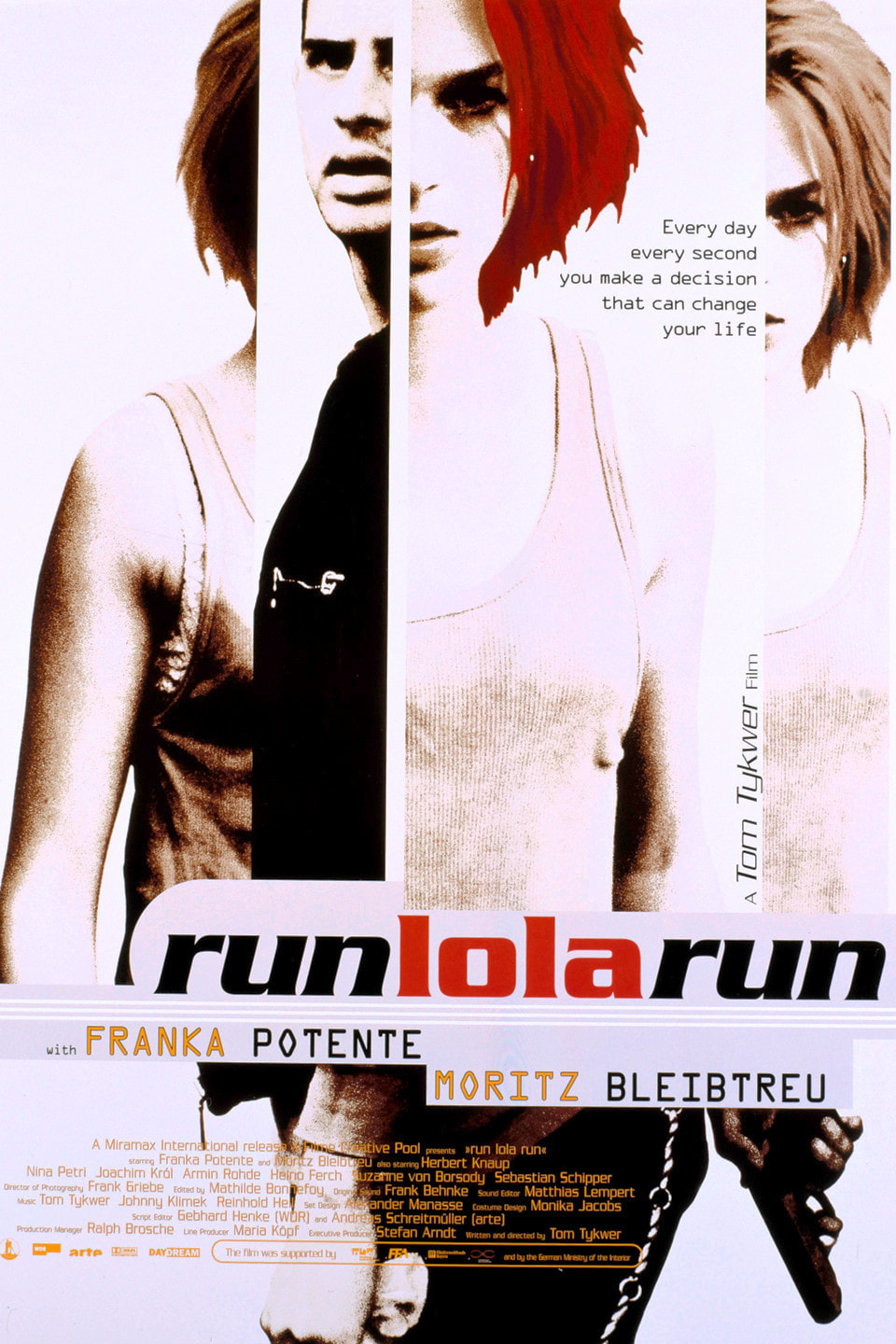
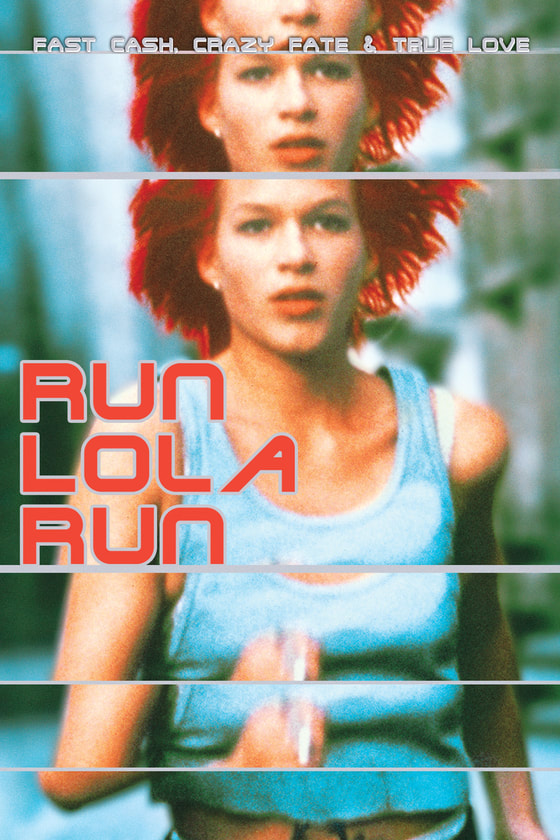
#73 - Run Lola Run
1998, Rated R

Gather round and I’ll tell you the tale of a desperate young woman with only minutes to save her lover from a variety of certain deaths.
(7/7/23)

​
The following recording is edited from its original 15-minute version due to copyright restrictions. To hear the full version, tune in or stream at the scheduled times on ktwh.org, or download on AudioPort.
Time, like art, is a highly subjective and strictly human concept. Depending on a whole plethora of social and personal factors, minutes and seconds can feel like an eternity while months and years can seem to pass in the blink of an eye. Likewise, small moments that are meaningless to some could to others mean the difference between lifelong happiness or unhappiness. Yet with our own tragically limited perception, we’re rarely if ever aware of how a single action of ours can affect the fate of someone else or vice versa. What if this or that happened just a second sooner or later? What if this or that didn’t happen at all? Would the new result be necessarily “better” or “worse” than any other? Do we really have any kind of control over such events? Or are our destinies truly predetermined without our knowing?
 
Lola, already frazzled from her moped being stolen, is dealt another hectic blow by a phone call from her boyfriend, Manni. He is beside himself with panic. He’s just misplaced a small fortune that was to be brought to Ronnie, a local mob boss. Unless Manni can get his hands on 100,000 marks by noon—a mere twenty minutes away—his life is forfeit. Despite Lola’s pleas not to be rash, Manni, in his desperation, tells her his plan to rob a supermarket at gunpoint before he ends the call. With no transportation, no communication, no ideas and no choice, all Lola can do now is run: run to save Manni from himself, run past any obstacle that stands in her way, run through as many of the bustling streets of Berlin as it takes. But anything and everything can happen along Lola’s route, and the even the briefest of her encounters with friends, family, and perfect strangers, have numerous unforeseen consequences on each of their lives.
 
According to director Tom Tykwer on the DVD commentary, there was an image in his mind, a running woman, “desperate” and “full of passion,” which he liked so much that he wanted to write a story around it. He explains that it “combines [. . .] very basic elements of cinema [and] shows an energetic body [. . .] movement and emotion in one picture and I think that’s what cinema, for me, always seems to be about, that we see dynamics and feelings and can follow them.” This is Lola to a T. Beneath the slightly grubby tank top, baggy pants, and mussed-up bright red hair (which makes me think of a more aggressive version of Aelita from the French sci-fi TV series, Code Lyoko: Evolution) is a soul that races as fast as she, fueled by anger, fear, and love.
 
The movie’s particular uniqueness comes from its narrative structure, the “experiment” of this experimental thriller, if you will. Lola’s phone call with Manni serves as a prologue of sorts. From there, we are presented with three episodes, each roughly lasting the plot proper’s twenty minutes, starting with Lola running from out of her apartment and ending with her finally reaching Manni at the supermarket. This format choice interestingly subverts the common film practice of condensing long periods of time into ninety minutes or less, instead stretching out a much shorter time to show more intricate story detail. More to the point, each episode is an exercise in cause and effect: Lola’s “three” runs contain so many direct and indirect differences in timing and execution on her part throughout, from falling down stairs or exchanging a word or two with passersby, to robbing a bank or causing traffic accidents, that the three aftermaths and their conclusions end up varying wildly from one another. This ties in with, as Tykwer puts it, “the subject of fate and coincidence and how they’re intertwined with each other and how a very, very small situation can change your whole life forever and push it into complete different directions,” an idea he wanted to show “to the max.” Among the methods he utilizes to do so are the frenetic but striking animated segments, courtesy of German-Isreali animator Gil Alkabetz, which are something like what you’d get if you took the “inner voice” persona of Lizzy McGuire, redrew her as a redheaded punk in that nostalgic squiggly yet lumpy style of mid-90’s Nickelodeon cartoons like Aaah!!! Real Monsters or KaBlam!, and then stuck her in a high-octane fever-dreamlike MTV music video. While I’m talking music, there’s also that equally formidable, pulse-pounding techno soundtrack. Some of its evocative vocals are masterfully performed by lead actress herself, Franka Potente, the lyrics of her song, “Believe,” representing the chaotic thoughts of her distressed character.
 
Like Jasper Morello, I first watched Run Lola Run in my LSC Film Appreciation course, this one to learn about artistic camera editing. Think Darren Aronofsky’s Requiem for a Dream (2000), except with an emphasis on providence instead of drug addiction. One of the most significant examples here is the rapid succession of flashing photos that reveal the multiple assorted fates of the side characters impacted by Lola’s run. Take Doris, an impoverished woman pushing her toddler in a stroller. In the first episode, she is almost knocked over by Lola and angrily shouts after her: she later loses her young son to CPS (Child Protective Services), steals another baby in her grief and is chased down. In the second, she is again struck by Lola, who this time around is limping due to a jerk tripping her: Doris later plays the lottery and wins the jackpot, allowing her family to live in happy luxury. But in the third, Lola manages to pass Doris without incident: the latter chats with a church member, find God through Mass and bible readings, and is last seen handing out religious pamphlets. Other such diverse cast members whose fates may or may not be set in stone include, but aren’t limited to, a guy on a bike, a female bank employee, a security guard, and a homeless man. Besides being a novel piece of editing art in and of itself, it’s a quick and succinct way of illustrating 1) the thematic concept of the butterfly effect without disrupting the film’s high-speed pace, and 2) the fact that every person out there, regardless of how little we know them or whether we ever meet them at all, has a life, with its own joys, sorrows, and humanity.
 
In fact, Tykwer employs several camera techniques to enhance the story. Numerous apparatuses were used for the recording alone, including a helicopter and crane for high, wide-range shots of Lola racing through the city, and a dolly system and Steadicam for smoother close-up shots as she navigates her way through pedestrians, bridges, and other urban obstructions. Also present is the classic split-screen technique, inspired in this case by the 70’s films of suspense and psychological thriller director Brian de Palm, like Carrie (1976) and Dressed to Kill (1980). But one particularly symbolic technique pertains to the main leads. Every scene featuring Lola and/or Manni is filmed in traditional 35 mm to show the audience that this is not only their personal story, but the story most “real” to them because it is what they are experiencing themselves firsthand:
 
(Over the phone)
LOLA: Listen to me. You hold tight, and I’ll come on over there. Don’t go anywhere and I’ll be there in twenty minutes, okay?
MANNI: (With bitter sarcasm) Yeah, and you’re gonna pawn all your freakin’ diamonds.
LOLA: (Firmly) I’ll meet you!
MANNI: (In a resigned tone) All right. I’m in a phone booth, downtown, in front of the Spirale Bar.
LOLA: Okay, stay where you are. I promise I’ll think of something. In twenty minutes, okay?
MANNI: (Staring at the store a short distance away) I’ll just go to the Bolle supermarket and get me that 100 grand.
LOLA: (Angrily) Cut it out, Manni!
MANNI: (Reasonably) Why? Ronnie said they make 200 grand per day so they must have half by now at least.
LOLA: (As Manni pulls a gun out of his back pocket) You’re crazy! Don’t do anything! Just sit tight in that damned phonebooth! I’m coming.
MANNI: (Completely calm) I’ll rob the store, that’s it.
LOLA: (Outraged) Are you out of your mind? Don’t do a thing! Stay put and I’ll be right over!
MANNI: And then? Huh?
LOLA: I’ll think of something! I’ll get the cash!
MANNI: (Yelling now) There’s no time! In twenty minutes, I’ll be dead unless I go over and rob that store!
LOLA: Just wait!
MANNI: Wait for what?!
LOLA: I’ll be fast! I’ll find a way to get the cash.
 
By contrast, scenes focusing on side characters, like Lola’s father and his mistress, Julia, are filmed in a much older-looking VHS quality to show how Lola and Manni’s absence from them makes the former’s story seem less real:
 
PAPA: I have to go. Meyer’s coming. (Strokes Julia’s cheek) Do you want to meet later on?
JULIA: (Just as he’s about to kiss her) Do you love me?
PAPA: What?
JULIA: Do you love me?
PAPA: (Confused) You have to ask?
JULIA: Well, answer me.
PAPA: (Insulted) Of course, I do, damn it!
JULIA: Then decide.
PAPA: Not now.
JULIA: (Not budging) This time you need to.
PAPA: Why are you acting like this now? All of a sudden?
 
And then there are the two flashbacks which separate the three episodes, featuring Lola and Manni laying together in bed. Hued in a deep, rich red, these do more than provide the audience with a moment to breathe after twenty straight minutes of adrenaline-pumped intensity as well as a nice piece of romantic intimacy. Lola in the first flashback and then Manni in the second each ask their partner a series of hypothetical questions about their relationship. Within the context of the main story that the two don’t know will occur in their future, this gives their apparent fear of abandonment and heartache all the more tension and meaning as they consistently test each other’s loyalty with various what-if scenarios. The knowledge that life can and does throw curveballs at any given moment stokes their need for reassurance that their love will stay pure and strong no matter what:
 
LOLA: What if me and you had never got together?
MANNI: Fine, what of it?
LOLA: (Looks at him skeptically) You’d be saying the same thing to another girl.
MANNI: (Sighing) Aw, man. If you really don’t wanna hear me talk . . .
LOLA: I don’t want to hear anything. I just want to know the truth.
MANNI: (Pacifying her) Okay. (Clears his throat) I feel . . . that you’re the best of the best.
LOLA: You “feel”? What does that mean, you “feel”?
MANNI: (Trying to find the words) It’s just . . . my heart.
LOLA: (Unconvinced) It says, “Good choice, Manni, she’s the girl”?
MANNI: (Simply) Mm-hm. Yeah.
LOLA: And you say, “Thanks a whole lot for the information, see you next time”?
MANNI: Yeah.
 
[. . .]
 
MANNI: If I were to pass away, how would you be?
LOLA: I wouldn’t let it happen.
MANNI: Yeah, well . . . Okay, what if I were terminally ill and there was no cure?
LOLA: (Without hesitation) Then I would find one.
MANNI: No, really. I’m in a coma and the doctor says I got one more day to live.
LOLA: (With a little grin) I’d put you in my boat then dump you in the ocean—shock therapy.
MANNI: Yeah, still, what if there were no more me? (Inhales on his cigarette)
LOLA: What do you want me to say?
MANNI: (Blowing out smoke) Just tell me.
LOLA: I’d sail off to a little island and toss your ashes at sea.
MANNI: (Refusing to let it go) And then?
LOLA: Who knows? Stupid question.
 
For anyone who prefers the traditional beginning-middle-and-end approach to storytelling, this movie may not be up your alley, nor may the concept of a woman who does little but run for over three quarters of a movie’s duration—especially in the same environment multiple times—sound anything but exciting on paper. For anyone else, though, Run Lola Run is one existential heck of an action-packed ride. A clever utilization of editing techniques, a gutsy but sympathetic heroine, and a thought-provoking theme of time to accompany a dynamic plot, turn what could have been a pretentious, lazily made bout of cinematic junk food into a smart and enthralling examination of decision and destiny, new beginnings and full circles. Speaking of coming full circle, I feel it fitting to end this with one of the film’s epigraphs, an excerpt from the poem “Little Gidding” by T.S. Eliot:
 
“We shall not cease from exploration
And the end of all our exploring
Will be to arrive where we started
And know the place for the first time.”
 
CREDITS:
Special thanks to KTWH 99.5 Two Harbors Community Radio. All images, audio, and links belong to their respective owners; no copyright infringement is intended.
 
MAIN THEME:
“The Call” - Briand Morrison and Roxann Berglund

https://www.briandmorrison.com/

https://www.facebook.com/BriandMorrisonGuitar/
https://www.youtube.com/user/briandmorrison​​​​​​​​​​​

EPISODE SONG:
“Out of Time” - Alex Nelson

​https://www.facebook.com/alex.j.nelson.7
All other music and sound clips are from the English dub of Run Lola Run (directed by Tom Tykwer; production by X-Filme Creative Pool, WDR, and Arte; distributed by Prokino Filmverleih).

OST SONGS:
“Running One (Large Mix)”
“Believe”

Download the full 15-minute episode here!

Run Lola Run on Wikipedia

Tom Tykwer on Wikipedia

Run Lola Run on IMDb

Run Lola Run on Rotten Tomatoes

Run Lola Run on Metacritic

Run Lola Run on Common Sense Media

Run Lola Run on Tv Tropes

Run Lola Run at Barnes & Noble

Run Lola Run on Amazon

Run Lola Run on eBay

​^^ Back to Movies, Short Films, and Other Works of Cinema
0 Comments

Aerial Absolution

1/6/2023

0 Comments

 
Picture
Picture
Picture
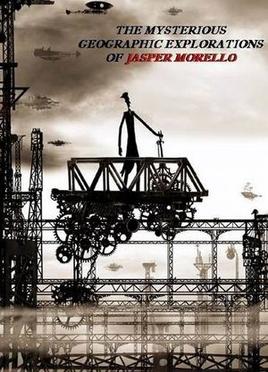
#70 - Jasper Morello
2005, Ages 16 and Up

Gather round and I’ll tell you the tale of a tormented aerial navigator whose quest for redemption forces him into a terrifying fight for survival in the sky.
(1/6/23)

​
The following recording is edited from its original 15-minute version due to copyright restrictions. To hear the full version, tune in or stream at the scheduled times on ktwh.org, or download on AudioPort.
The Film Appreciation course I took at Lake Superior College in 2007 was something of a novelty for me. Not only because it was my longest class period at two and a half hours in order to watch full-length movies in one go, but it was also the first media course I ever took that wasn’t focused on books. The class’s objective was to study the artistic qualities of cinema—color, lighting, editing, camera angles, etc.—and explore how the symbolism they offer enhances a film and helps it tell its story. Many of the flicks I studied I’d heard of but never watched prior as a casual viewer, like Rear Window, Singin’ in the Rain, and Citizen Kane, and I am ever grateful for the opportunity. But my absolute favorite in the class—except for A Trip to the Moon, one of the very first films ever made—was this Australian animated short through which we studied cinematic surrealism. And surreal is indeed a fitting word.

Jasper Morello’s career as an aerial navigator for the Authority of Gothia is in shambles, as is his heart and soul. A grave technical error on his part during a previous voyage had resulted in a crew mate plummeting to his death, and Jasper has been guilt-ridden ever since. Adding to his depression is the now all-too-common sight of his people being violently decimated by a mysterious flesh-eating disease, and the fear that his beloved wife and devoted nurse, Amelia, could herself succumb to it at any time. But salvation may be at hand when Jasper is commissioned despite his record to set sail on the airship Resolution and deploy weather beacons in the outer skies. Also on board is Dr. Claude Belgon, an ambitious biologist conducting his own research on the plague. But what begins as a routine excursion spirals into madness when the key to a cure is found in the form of a deadly creature. When this discovery drives the fame-lusting Dr. Belgon to murder, Jasper must overcome his past in order to save himself and bring the life-saving cure home.

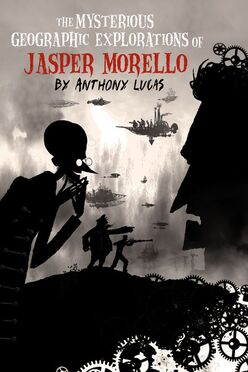
I say Jasper Morello, but the name is a misnomer. Sort of. The full title shown within the short is The Mysterious Geographic Explorations of Jasper Morello, but this is also the collective name of a planned (and as of 2023, unrealized) film series. According to the official website and the Madman Entertainment DVD—both links of which seem to be broken if not entirely defunct for some reason—this is the first of a trilogy, its standalone title being Jasper Morello and the Lost Airship (a.k.a., “The First Voyage”) followed by Jasper Morello and the Return of Claude Belgon (“The Second Voyage”) and Jasper Morello and the Ghost of ALTO MEA (“The Third Voyage”). Following this trilogy of shorts in turn would have been a full-length feature film, Jasper Morello and the Ebeneeza of Gothia (“The Fourth Voyage”).

A bona fide “Shut up and take my money!” moment that at this point may never be, though one can still hope. Still, it won numerous awards the world over and was a nominee for Best Animated Short at the 78th Academy Awards, so there is that. (Interestingly, also nominated that same year was 9, which inspired the 2009 CGI film of the same name about human souls in a bleak, mechanized world.)

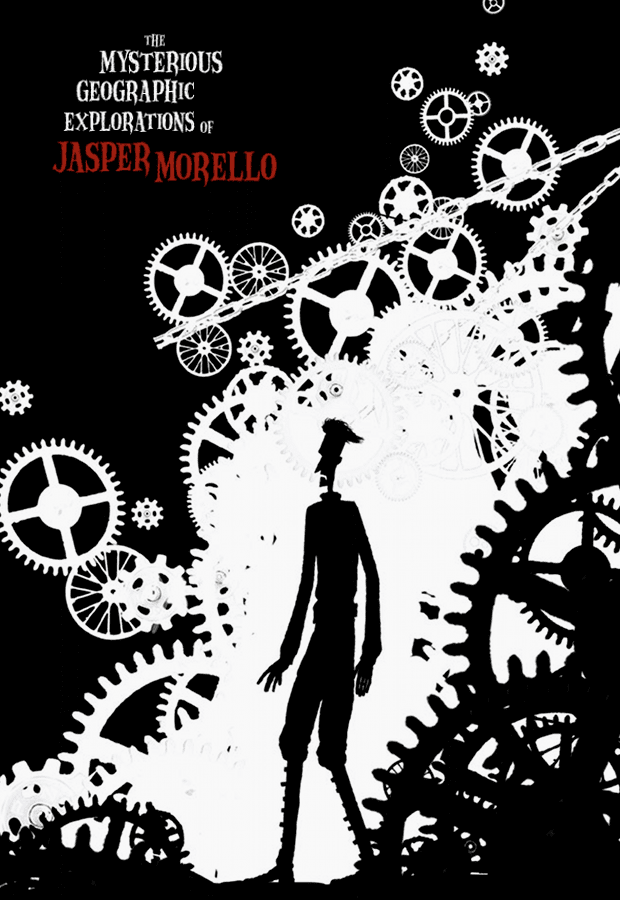
Contrary to popular belief, director Anthony Lucas was not inspired by silhouette animation pioneer Lotte Reiniger or her 1926 film (one of the first animated feature films ever made), The Adventures of Prince Achmed, as comparable as their styles are. Lucas’ initial inspiration came from the lush landscapes and giant creatures of 1933’s King Kong as well as the works of stop-motion pioneer Ray Harryhausen. Then, while experimenting with a light table in film school, one of the top lights blew, resulting in one object, a cicada, being backlit, its wings and ribcage revealed in relative detail and the bulk of its body mostly in silhouette. Talk about a happy accident! This became the basis for one of Lucas’ first shorts, Shadowlands, named after this newly-discovered technique which combines 2D and 3D. It reminds me of the “Lumage” technique used in Twice Upon a Time, except instead of bits of tissue paper and plastic, the ships, machines, and many other objects in Jasper are made via clusters of junk metal, a broken hubcap becoming a porthole, a motor engine piece becoming a console, a glass tube becoming a pipe, and so forth. Their bright sheen and semi-transparency breathe a unique life into the intricate, chaotic beauty of the film’s steampunk aesthetic while remaining sufficiently obscured so as not to detract from the main characters:

CAPTAIN GRISWALD: Coils and oils, Mr. Kemp?
KEMP: (Turning a steam valve.) Charged and hot, sir.
(Jasper retrieves his compass while the captain pulls a level from above.)
CAPTAIN GRISWALD: Mr. Kemp, airscrew to one hundred revolutions.
KEMP: One hundred, sir. (Pulls on a chord, activating the ship’s propellers.)
CAPTAIN GRISWALD: Mr. Morello, we are in your hands.

Not unlike the boy from the video game LIMBO (and I must admit this movie was a major influence toward my later love for that game), the human silhouettes’ 2-dimentional cut-out features are so finely detailed that I feel I could imagine perfectly what each character’s 3-dimentional features would look like.

Though monochrome for the most part, color does play an important role. The lit backdrops are hued with various shades to match the specific mood of a given scene. For instance, the sky above Gothia is a pale, orange-tinted yellow to match the city’s smoggy industrial atmosphere and sickly medieval wretchedness. As the voyage progresses, shades of grey become more prominent: a dark steely blue for intense, nerve-racking storms, a dull murky green for eerie, silent sailing, and a refreshing silvery white for the joy and relief of finding land.
​
In terms of visuals and tone, Lucas took pages from the books, so to speak, of two of his favorite childhood authors: the alternate Victorian English setting and technological early century wonders from the epic adventure of Jules Verne, and the human darkness and bleak melancholy from the gothic horror of Edgar Allen Poe. On this note, I feel it worth reiterating that the ship Jasper first sets sail on is the Resolution, a word meaning a firm decision or intention or the action of solving a problem. During a violent storm, the crew is forced to abandon ship when it crashes into the ghost ship Heironymous, a subtle but significant nod to 15th century Dutch painter Hieronymus Bosch—most famous for his outlandish but terrifying depictions of Hell. This signifies not only Jasper’s first steps into a world of physical and mental horror, but that his already unstable confidence in himself and his redemption are now at even greater risk of being broken entirely:

JASPER: (Narrating; looking down in disbelief as his compass falls along with the wrecked Resolution) In one fell stroke, the Resolution was destroyed, and with it, my career.

[. . .]

CAPTAIN GRISWALD: (Kicking down a door and finding the ruins beyond) What the blazes?

[. . .]

DR. BELGON: (Accidently kicks something hollow as he walks; turns to find a pile of human skulls and bones; whispers in shock) My god.

And speaking of dark storytelling, some of the most famous gothic novels from 19th century Britain, like Bram Stoker’s Dracula, Mary Shelley’s Frankenstein, and Robert Louis Stevenson’s The Strange Case of Dr. Jekyll and Mr. Hyde, are epistolary, meaning they are written as a series of documents: letters, diaries, newspaper articles, etc. While Jasper Morello can’t execute this format by virtue of being visual, it still does a wonderful job at simulating the experience of hearing a scary story through the words of a sensible but kind-hearted English gentleman fighting personal demons on top of the outside ones beyond his human understanding. Through his haunting and poetic journal entries, recited in voice actor Joel Edgerton’s soft and somber tones, Jasper tells us his story like a man who has aged well before his time, broken-spirited and with seemingly little to live for:

JASPER: (Narrating; gazing at the airships flying outside his home.) One degree is not a large distance. On a compass, it is scarcely the thickness of a fingernail. (Picks up his compass) But in certain conditions, one degree can be a very large distance. (Stares, forlorn, at the compass in his hand; hears in his memory a man screaming as he falls helplessly.) Enough to unmake a man.

At the same time, his theme music, with its music box bells, slow strings, and minor key, suggests an optimistic confidence and innocence he’d retained even in adulthood having been shattered forever like a fragile clockwork toy.

Jasper’s status as a social outsider and a professional failure are made evident through his crewmates. Compared to the courteous and refined Jasper, they are almost pirate-like: superstitious and more suited to grunt work and crude pleasures than on higher learning or personal reflection:

(Jasper joins Kovacs and Kemp outside as they observe lights in the sky)
KOVACS: Borealis.
KEMP: No! Souls of the dead, that is!

CAPTAIN GRISWALD: (Slapping Kovacs on the back amiably) Ah, Kovacs, king of the pork fishers!
(The rest of the crew laugh and cheer as they drink to the huge pork fish on the table.)

Captain Griswald in particular, his temper as pronounced as his Scottish accent, has neither love for nor faith in Jasper after his literal fatal mistake, not only denigrating the young navigator at every turn, but fully expecting him to make this the final voyage for all of them:

CAPTAIN GRISWALD: (Angrily running toward Jasper as he boards the Resolution.) Get off my ship!
JASPER: (Silently holds out a document.)
CAPTAIN GRISWALD: (Snatches the paper with a grunt and reads it.) I see the Authority has given me little choice. (Points a menacing finger at Jasper.) But I’ll not tolerate another mistake. Do you ken?
JASPER: (In earnest.) Yes, sir.

[. . .]

CAPTAIN GRISWALD: (Full of distrust) Course, Mr. Morello?
JASPER: Maintain course and speed.
CAPTAIN GRISWALD: Are ye certain?

[. . .]

(The ship hits some sky debris)
CAPTAIN GRISWALD: (Furiously at Jasper) Agh, ye’ve killed us all this time!

It’s because of this alienation that Jasper comes to see Dr. Belgon as an ally and friend. Besides being of Jasper’s social class, the doctor appeals to Jasper’s intellectual side, both aspects of which are emphasized by the elegant harpsichord accompanying many of the doctor’s scenes. He provides the young navigator with the rare pleasure of companionship and the chance to forget his responsibilities for a time:

JASPER: (Narrating; observing an ant farm as Dr. Belgon lectures) Though the doctor was more than a decade my senior, we got on famously.
DR. BELGON: The formicidae are remarkable, each can lift ten times its own weight.
JASPER: (Fascinated) Indeed. Perhaps we should fashion our diet after theirs.
BOTH: (Laugh agreeably)

More importantly, Dr. Belgon is a passenger, and therefore not connected to Jasper’s tragedy. This allows Jasper the comfort of confiding in him without fear of reprimand or judgment:

DR. BELGON: (Wisely to a saddened Jasper) As with the ant, every man has a purpose. He must serve that purpose, no matter the cost.

However, it soon becomes clear where the “good” doctor’s loyalties truly lie. The more fantastic, and lethal, discoveries he makes, the less important the crew’s lives become to him—except for Jasper, as his increasingly sinister, minor-keyed harpsichord highlights. Dr. Belgon takes full advantage of Jasper’s friendship and preys on his concern for his wife, leaving the younger man in yet another moral crisis:

DR. BELGON: (In a fatherly voice to the creature sleeping in its cocoon) Come out, little one. There’s my beauty.
JASPER: (Appalled) For God’s sake, man. Cast it overboard!
DR. BELGON: (Reasonably) Then what remedy will you bring to your wife?

[. . .]

DR. BELGON: (In a tone of awe as the creature begins to hatch) Extraordinary, is it not?
JASPER: The captain must know.
DR. BELGON: (Not listening) The academy will send me back to the island. I will insist, that you command the voyage!
JASPER: (Firmly) No!
DR. BELGON: (In a hurt tone) Morello. (Suddenly nervous) The crew will panic! They’ll kill it!
JASPER: (Narrating) If the creature died, so did Amelia. I could not allow that to pass.

[. . .]

JASPER: (Desperately as he’s unable to free himself from his chain at the helm) For pity’s sake, Claude, don’t do this.
DR. BELGON: (Unmoved) Every man has his purpose. Yours is to get us home. (Gives Jasper a sinister smile) Your wife is waiting.

This is all the more terrible for Jasper because, unlike the last time, this will be not an accident, but a choice: does he alert the crew to the imminent danger of their monstrous cargo at the cost of its priceless blood? Or does he heed the doctor and allow it to live at the cost of his surly crew mates? Either way, Jasper’s hands will be further stained with innocent blood . . . unless he can find the courage to believe himself capable of leaving more than death in his wake and in his legacy.

I’ve always been a supporter of the belief that the shorter story that leaves the audience wanting more is always superior to the longer one that wears out its welcome before the end. As sad as I am at the unlikelihood of this film series ever coming to full fruition, I am glad we at least got this small but grand piece for Victorian gothic fans, unique animation enthusiasts and steampunk aficionados alike. Jasper Morello, both as a man and a movie, brings to its audience the true shadows of shadow puppetry.

CREDITS:
Special thanks to KTWH 99.5 Two Harbors Community Radio. All images, audio, and links belong to their respective owners; no copyright infringement is intended.

MAIN THEME:
“The Call” – Briand Morrison and Roxann Berglund

https://www.briandmorrison.com/

https://www.facebook.com/BriandMorrisonGuitar/
https://www.youtube.com/user/briandmorrison​​​​​​​​​​
EPISODE SONG:
“One Degree of Freedom” - Sean Zarn

https://www.facebook.com/sean.zarn

All other sound and music clips are from The Mysterious Geographic Explorations of Jasper Morello (directed by Anthony Lucas; production by 3d Films Pty Ltd., Australian Film Commission, Film Victoria, and SBS Independent; distributed by Monster Distributes).

​Download the full 15-minute episode here!

Jasper Morello on Wikipedia

Jasper Morello on Spindly Figures, Anthony Lucas’ Official Website

Jasper Morello on IMDb

Jasper Morello on Rotten Tomatoes

Jasper Morello on Tv Tropes

Jasper Morello on Amazon

​^^ Back to Movies, Short Films, and Other Works of Cinema
0 Comments

An Epic Tribute

9/2/2022

0 Comments

 
Picture
Picture
Picture
Picture
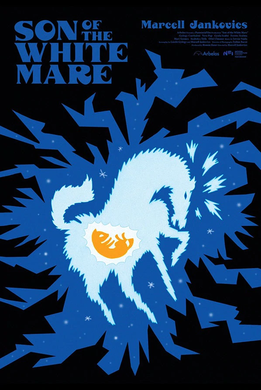
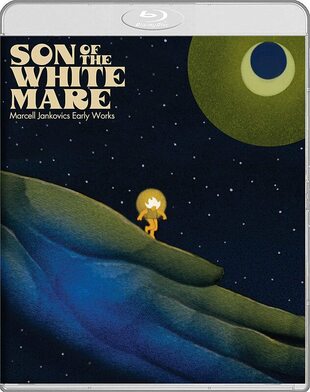
#68 - Son of the White Mare
1981, Ages 16 and Up

Gather round and I’ll tell you the tale of a warrior god born from the womb of a celestial horse.
(9/2/22)

​
The following recording is edited from its original 15-minute version due to copyright restrictions. To hear the full version, tune in or stream at the scheduled times on ktwh.org, or download on AudioPort.
It sometimes saddens me that America, being such a comparatively young nation, doesn’t have its own mythology the way other older cultures do. Sure, we have our tall tales: Paul Bunyan, Johnny Appleseed, John Henry and the like. But I wouldn’t go so far as to place Darth Vader, Yoda, Batman, Superman and Spider-Man on the same pedestal as Zeus, Odin, Shiva, Anubis, and Kukulkan. With all due respect to the former, and despite their wild popularity and influence, I think it may be because they feel too modern and commercialized to me. True mythological figures, in my mind, are ancient and omniscient forces of nature, not only providing (supposed) explanations for why the world is the way it is now, but existing in a dreamlike time and space beyond mankind’s reach and earthly comprehension. Thus, it is particularly enlightening to experience a mythological story expressed from the heart of its own native country, even if—or maybe especially when—it’s done via contemporary means.
 
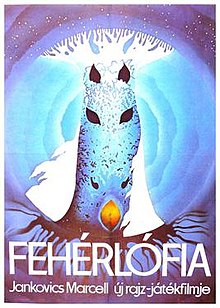
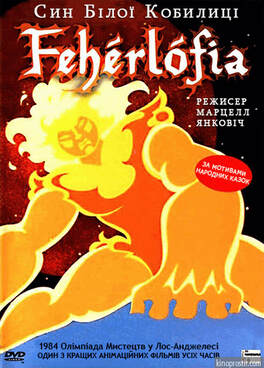
A beautiful white mare goddess races for her life through a dark forest as her once glorious realm falls. Just as the evil minions in pursuit are about to claim her, the mare finds safe haven within a mighty hollow tree. It is here that she gives birth to a human boy, Treeshaker, who gains his godly strength from his mother’s milk. As he grows to manhood, the mare tells her son the story of the Sky King and Snow Queen, and their three princely sons who married three fairy princess sisters, Autumnfair, Springfair, and Summerfair. All would have been happy and prosperous, had the curious sisters not opened the one door forbidden to them. The three evil dragons, now freed, immediately captured the princesses, killed the princes, overthrew the King, and imprisoned the Queen. The Queen bore two sons, who disappeared; while pregnant with a third child, she escaped—in the form of a white mare. Understanding his birthright and his purpose, Treeshaker sets out to reunite with his long-lost brothers—Stonecrumbler and Irontemperer—and with them, journey into the Underworld in order to defeat the dragons, reclaim their brides, and restore their kingdom.
 
The plot of White Mare is based on the 1862 Hungarian folktale Fehérlófia, by László Arany, with director Marcell Jankovics giving at the beginning a dedication to “the Scythians, Huns, Avars, and other nomadic peoples.” Though Jankovics had wanted to make a fairytale movie from the start, his original vision couldn’t be realized due to the political tensions prevalent in the Cold War Eastern Europe in which he grew up. According to animation historian Charles Solomon in the Blu-ray’s booklet:
 
“A scholar of mythology and symbolism, [Jankovics] initially planned to meld several folktales into a feature that would explore the cycles of time and space. [. . .] But according to Marxist theory, time is irreversible. A film that focused on the recurring cycles that characterize many myths could be perceived as anti-Marxist by the Soviet-dominated government.
 
Instead, Jankovics turned to ‘The Son of the White Mare,’ an oral epic of Central Asia that was brought to Europe by the early Hungarians. Like all folktales, it exists in multiple versions (more than 50 variations have been collected by scholars in the Carpathian Basin), and the filmmaker drew elements from a half-dozen accounts of the story.”
 
For unknown reasons, the film wasn’t distributed in America upon release. Very strange, not to mention downright devastating, considering the factors that would have worked in its favor:


  1. Jankovics had already proven himself an animation pioneer beforehand, having directed the very first Hungarian animated feature film, János Vitéz (Johnny Corncob) in 1973, and following with the Oscar-nominated short Sisyphus in 1974;
  2. Disney was in the middle of its Bronze Era, struggling due to its namesake’s passing in 1966;
  3. Aside from the syndication of Astro Boy, anime hadn’t yet made its mark in the west;
  4. Very few other western animated feature films made prior were remotely comparable to it, some exceptions including Fantasia, Fantastic Planet, and Yellow Submarine.
 
Still, White Mare did find success, being placed at #49 on the Olympiad of Animation in 1984 and premiering at the Los Angeles International Animation Celebration in 1985. Then, in 2019, LA studio Arbelos Films and the Hungarian Film Institute gave the movie a stunning 4K restoration, screening it at the 2019 Fantasia International Film Festival and planning a long-overdue theatrical release in the U.S. soon after. This plan was unfortunately shelved in the wake of the Covid-19 pandemic, so White Mare was instead made available to stream in America through Vimeo in late 2020, and then released on Blu-ray in 2021.
 
The “brave hero rescues damsel in distress from evil monsters” plot is pretty basic and antiquated on paper, but Jankovics makes it stand out by giving it a phantasmagoric 20th century coat of paint in every sense of the term. White Mare’s production and design was heavily influenced by the psychedelic drug culture of the 60’s, resulting in a piece meant to stun the senses and mystify the mind as well as entertain the eyes.
 
The music alone speak volumes (pun intended) of the alien world viewers are about to enter. Though the electronic soundtrack may seem better suited for equally surreal but more contemporarily-based movies like Labyrinth, Willy Wonka and the Chocolate Factory, or 2001: A Space Odyssey, the synthesized ambience fits the mythological setting: dreamy and nightmarish all at once, completely transcendent of time, space, and all things mortal.
 
I think where Jankovics is at his most creative and clever is how he reimagines and enhances the story’s traditional fairytale tropes and symbols with his own unique artistic nuances, namely, his highly abstract design and heavy emphasis on vivid colors and symmetrical shapes. This is best portrayed by the three brothers, who are kind of like the incarnation of the Goldilocks concept of “too hot, too cold, just right”:
 
STONECRUMBER: [Nervously] Your Royal Highness, dear father . . . We were, uh, thinking . . .
IRONTEMPERER: [Rudely] Give us our fair share!
TREESHAKER: [Respectfully] Dear father and mother, our King and Queen. We would like to get married.
 
As is so with their polar opposite brides, and their adversaries, who, by the way, are not dragons in the traditional sense (I think of them more like golems myself, but that’s just me).
 
Stonecrumbler, the first-born, is colored in shades of coppery red with lots of teardrop-shaped curves (some more flattering than others). Such a design I believe fits his personality as a careless, hotheaded bumbler, slow in words and wit, with more rocks in his head than in his hands. These traits contrast the vein and sensual nature of his lusty, and dare I say, busty, destined bride, Autumnfair, while paralleling the Three-Headed Dragon, a crude, boorish oaf made of stone:
 
STONECRUMBLER: [Trembling after being pulled back up from the pit of the Underworld] There are so many nasty creatures down there, they almost pecked out my eyes. It was so dark, I couldn’t see my own hands.
--
AUTUMNFAIR: [Seductively to Treeshaker] What brought you here? No soul ever comes here.
TREESHAKER: [Awkwardly as she embraces him] I am here . . . I’ve come for you.
AUTUMNFAIR: [Suddenly pushes him away in disgust with a sneer] Oh just get lost, before my husband comes home. My husband is the three-headed dragon. And when he gets home, he’ll kill you.
--
THREE-HEADED DRAGON: Woman! I smell a stranger here. [. . .] Well then, let’s fight on the copper field!
 
Irontemperer, the middle brother, is a bit more competent than Stonecrumbler, though not by much. His triangular, silvery blue form represents an arrogance as cold and hard as the metal he molds like clay. His brashness is balanced out by his very needy and very whiny betrothed, Springfair; and her captor, the Seven-Headed Dragon, matches his aggression via the personification of war: a fully armed tank. (No, I’m not making that up):
 
IRONTEMPERER: [to Treeshaker as he finishes his sculpting his metal club] I will go with you, my friend. But first I want to know who is the strongest among us. [Increasingly aggressive] Who is going to lead us? Let’s wrestle!
--
SPRINGFAIR: [Terrified almost out of her wits] What brought you here? No soul ever comes here!
TREESHAKER: [Perfectly calm] I’ve come for you.
SPRINGFAIR: [Pushes him away, frantic] Oh just get lost, before my husband comes home. My husband is the seven-headed dragon. He can throw his club from seven miles. And when he gets home . . .
TREESHAKER: [Almost amused] . . . he’ll kill me, I know.
SPRINGFAIR: [Quiet now, but still fearful] Yes, he’ll kill you, right away.
--
SEVEN-HEADED DRAGON: Who’s here? I’ll tear him apart! [. . .] [To Treeshaker] You dog! You must die! My silver field is waiting for you.
 
And then there is Treeshaker, the youngest, and therefore, the kindest, bravest, and overall best, as is visually apparent from his hues of golden yellow and the sunlike spheres adorning his face. Some of his attractiveness is more subtle: his name and special ability symbolizing nature and life, as opposed to his brothers’ inorganic mineral names, and well as his modesty, as Stonecrumbler goes shirtless and Irontemperer’s smock covers only his front. Likewise, Treeshaker’s beloved, Summerfair, is more reserved and dignified than her sisters; and his enemy, the Twelve-headed Dragon, though his pixilated skyscraper form makes him look like a boss from a vintage Atari game, is nevertheless more terrifying and powerful than his brothers because of his intelligence and foresight:
 
TREESHAKER: [To his brothers] My dear brothers, my mother told me that the fairy princesses have been kidnapped by dragons. We must find the hole the dragons used to enter the Underworld. [. . .] [Addressing the golden castle] Castle, stop spinning! Or else, I’ll destroy you!
--
SUMMERFAIR: [With demure curiosity] What brought you here? No soul ever comes here.
TREESHAKER: [With true love] I’ve come for you.
SUMMERFAIR: [Embraces him] Oh, my sweet savior.
--
TWELVE-HEADED DRAGON: [With a booming malevolence] I know you, Treeshaker, Son of the White Mare. I’ve known ever since you were just a tiny fetus in your mother’s womb, that someday we would do battle. [. . .] You have killed two of my brothers. Even if you have a thousand lives, you’ll die for this. [. . .] Let’s see, then, how strong you are. Join me on the golden field.
 
Yet in spite of these obvious differences, I love the artistic touches which illustrate the warriors’ brotherly bond. Many shots cut or dissolve from one brother to another in such a way as to give the illusion that they are morphing into one another, while others show the circular ground rotating beneath them as they walk, as if their godly motion is what moves their entire world. And in one of the film’s most beautiful sequences, before beginning their journey, the trio swears their undying loyalty to each other by grasping hands around Irontemperer’s triangular club. Their linked arms dissolve into a flowing braid-like design as it rotates clockwise; the sides of the club multiply, changing it into a twelve-pointed sun, which in turn transforms into the brothers’ divine faces.
 
It’s movies like this that make both foreign animation and film as an art form so enthralling to me, not to mention remind me of the majesty and real-world significance of folklore. Jankovics not only turns what would otherwise be a very basic and clichéd story into a kaleidoscopic powerhouse of epic fantasy, but does so without diminishing its universal qualities or disparaging its noble heritage. I hope that many more hidden cinematic gems are found and polished so they may be given the admiration this cosmic jewel was once so sadly denied.
 
CREDITS:
Special thanks to KTWH 99.5 Two Harbors Community Radio. All images, audio, and links belong to their respective owners; no copyright infringement is intended.

MAIN THEME:
“The Call” - Briand Morrison and Roxann Berglund

https://www.briandmorrison.com/

https://www.facebook.com/BriandMorrisonGuitar/
https://www.youtube.com/user/briandmorrison​​​​​​​​​

EPISODE SONG:
“The Human God” - Sean Zarn

https://www.facebook.com/sean.zarn

All other music and sound clips are from Son of the White Mare (directed by Marcell Jankovics; production by PannóniaFilm; distributed by MOKEP and Arbelos Films.)

Download the full 15-minute episode here!

Son of the White Mare on Wikipedia

Son of the White Mare on Arbelos' Official Website

Son of the White Mare on IMDb

Son of the White Mare on Rotten Tomatoes

Son of the White Mare on Metacritic

Son of the White Mare on Tv Tropes

Son of the White Mare on Amazon

Son of the White Mare on eBay

​^^ Back to Movies, Short Films, and Other Works of Cinema
0 Comments

Swingin' Sister Act

5/6/2022

0 Comments

 
Picture
Picture
#66 - The Triplets of Belleville
2003, Rated PG-13

Gather round and I’ll tell you the tale of a trio of eccentric singers who help a determined old woman rescue her kidnapped grandson.
(5/6/22)

​​
The following recording is edited from its original 15-minute version due to copyright restrictions. To hear the full version, tune in or stream at the scheduled times on ktwh.org, or download on AudioPort.
The first day of my Children’s Media class at LSC is one that I won’t soon forget. Upon receiving my syllabus, I had to blink a few times at a particular book on my list: Carrie by Stephen King. “Is this for real?” I wondered. My classmates’ expressions told me they were having similar thoughts. Amused at our collective confusion, our professor simply said, “I know what you’re all thinking, and I promise it will make sense.” Turns out, he was right. Instead of focusing on the horror, try reading Carrie with classic fairy tales and their common tropes and symbols in mind, particularly Cinderella. You’ll be amazed, trust me. One of the most prominent questions our professor had us consider throughout the course was, “What makes a story for children?” If you’ve seen “kids’ movies” like Labyrinth and Watership Down as I had to in class, you’ll understand what a conundrum this actually was. This movie was no easier to categorize; the cover art alone makes the 1976 Carrie movie look like a real fairy tale (albeit a very dark one).

Madame Souza spends her days in a little house in the French countryside raising her orphaned grandson, Champion, who has an insatiable passion for cycling. Ever the devoted grandmother, she takes it upon herself to be his coach and train him for the prestigious Tour de France. During the great bike race, however, Champion is kidnapped by black clad mafia henchman to be a pawn in their underground gambling ring. Souza pursues them all the way across the Atlantic, only to lose them in the bustling city of Belleville. Fortunately, some improv percussion on a busted bike wheel attracts the attention and aid of Rose, Violette, and Blanche, three singing, swinging sisters known in the music hall world as the Triplets of Belleville. With the Triplets’ flair and street smarts, and her stubbornness and obese family dog, Bruno, on her side, Souza determines to take on as many mini mob bosses and giant gun-toting goons as necessary in order to rescue Champion.

In the American theatrical trailer, A.O. Scott of the New York Times calls Sylvain Chomet’s film “[a] far cry from either Walt Disney or Japanese anime”. He couldn’t be more right, for many reasons. The Triplets of Belleville has the honor of being the first PG-13 film to receive an Academy Award nomination for Best Animated Feature. It lost (surprise, surprise . . .). Still, how could it not stick out like a sore thumb against more conventional fare like Finding Nemo and Brother Bear? And “sore” may very well be an apt word for this. Here are some of the most grotesque character designs I’ve ever seen—and I for one couldn’t be more fascinated. From gargantuan girths and scraggly limbs to bulging teeth and flabby skin, virtually every figure and feature has been deliberately and immensely exaggerated to be humorous and discomforting in equal measure. There is a 1513 painting by Flemish artist Quentin Matsys called “The Ugly Duchess”, said to have inspired John Tenniel’s original illustration of the Duchess in Lewis Carroll’s Alice’s Adventures in Wonderland. It shows an old woman in exquisite attire but who herself is wrinkled, square-jawed and has withered breasts, a sort of parody of traditional feminine beauty. That more or less sums up the unlikely heroines in this Wonderland of caricatures. No pretty Disney princesses or sexy anime warriors here! Madame Souza is as short and stout as a teapot, with thick glasses that magnify her irises to comical proportions and a single platform boot for an apparent leg length discrepancy. And then there are the Triplets: tall in height but stooped in back, their wizened faces sagging so heavily it looks like it takes effort just to move their features.

But what they may lack in aesthetic appearance, they make up for with their pluck and charm. This is actually crucial since the film contains virtually no spoken dialogue, the story told instead through pantomime, a type of stage theater in which the performers express meaning through gestures and songs. I find this artistic choice appropriate considering it can also refer to a ridiculous or confusing situation, an apt description for this movie’s vibe, more on that later. What few lines do exist (TV, radio, etc.) are for setting and atmosphere rather than plot (a plus for viewers who may dislike foreign films because of distracting subtitles). Souza herself speaks a grand total of twice, and never on screen, but no more than that is needed to show her sweet side: when she tries to bond with Champion as a child while watching TV, and then when she innocently but spectacularly fails to entertain her musical hostesses on their piano. But through her silence she exudes the kind of doggedness only a little old lady can pull off, whether she is habitually shoving her glasses up on her face with a firm finger before every important task or keeping incessant pace with her coach whistle during every cycling trip. The Triplets are just as delightful to watch and to hear, three 1930’s jazz counterparts to the Sister Act nuns. Their voices may be cracked and dusty and their glory days on the stage long gone, but their expert musical ears, boundless vigor, and upbeat attitudes keep them forever young and forever endearing.

All that said, Souza and the Triplets are a lot more human than the rest of the cast, in every sense of the word. Champion is like a strange hybrid of man and racehorse, with huge docile eyes, a stretched nose, bulging leg muscles, footsteps that clip-clop like hooves, and seemingly limitless stamina that gives new meaning to the term horsepower. But he is also broken in like a horse, putting up no fight whatsoever against any “handlers” and instead tamely following wherever he’s led with soft nickers and whinnies.

The bad guys make almost no sound at all, I think partly to make them intimidating, but mostly, with their design, I think for them to do so might make them even weirder. The animators take the stereotype of ten-foot-tall subordinates serving a less-than-one-foot-tall boss a comedic step further by building the former like the unnaturally rectangular monoliths from 2001: A Space Odyssey, and the thick-mustached, bulbous-nosed superior like the Mario Bros.’ drunk, narcoleptic uncle, his head sleepily flopped on every flat surface in front of him. Though, like Champion, the mafia’s tiny mechanic has some animal in him, too; in this case, a mouse, possessing large, round ears and buckteeth, and expressing himself through nothing but cute little squeaks.

Complimenting the bizarre visual style is the classic Looney Tunes sense of humor, which I think is just as smart. Take Belleville itself for an example. A combination of the world’s most prominent cities--Paris, New York City, Montreal, and Quebec—Belleville is a satire of extreme consumerism, with morbid obesity rampant among not only the background characters, but even certain inanimate icons, like the very well-fed Statue of Liberty—holding an ice cream cone and a cheeseburger on a plate instead of a torch and tabula ansata—and the much stockier Oscar statuettes lining the Triplets’ shelves. And remember how Looney Tunes would often lampoon mid-20th century celebrities like Humphrey Bogart, Frank Sinatra, and Jimmy Durante? Well, the opening sequence does just that. While the Triplets in their younger days perform on an old variety show, we see some rather risqué Fleischer-esque parodies of Romani-French jazz guitarist Django Reinhardt; black French entertainer Josephine Baker; and American dancer Fred Astaire. Although, the film’s grungier palette and comparative realism tends to make such humor more objectively insane. One of my favorite scenes of this kind is when Blanche treks to a pond, tosses a live shaft grenade into the water, and cheerfully waits under her umbrella for the exploding geyser to send a rain of dead frogs plopping into her fishing net for her to take to her sisters to cook for dinner.

And I don’t know whether or not this was intentional, but I also like how the filmmakers don’t just play with certain stereotypes, but mold and squash and tease them until they are as hilariously odd as the heroines. Besides the Triplets, being French, eating literally nothing but frogs (hence the extreme hunting method), they also make clever use of household items traditionally associated with stay-at-home women. During the climax, Rose’s frying pan makes a great weapon for bashing baddies unconscious and shielding against flying bullets. But perhaps the best example is the restaurant scene in which the Triplets perform a very unique musical number with a newspaper, a refrigerator’s steel rungs, and an old vacuum cleaner, the last of which the animators, according to the DVD commentary, had affectionately named “Mouf-Mouf.”

Fantasy Horror writer Clive Barker once said regarding pantomime:

“[In] truth there is much in the form I admire. Its artlessness for one; its riotous indifference to any rules of drama but its own; its guileless desire to delight. And of course beneath all its tarnish ways there is buried a story of primal simplicity: good against evil, love triumphing over hate and envy” (The Painter, the Creature and the Father of Lies, Pg. 246).

A perfectly ironic, yet ironically perfect description of this movie. At its core, The Triplets of Belleville is a familial search-and-rescue story, and the creators could have stopped at the already funny twist of the old grandmother saving the young adult grandson rather than vice versa. But the sheer absurdity of its characters, its eccentric soundtrack, and tongue-in-cheek wit turn a potentially dull and off-putting presentation into a joyride as exceptional as it is farcical.

CREDITS:
Special thanks to KTWH 99.5 Two Harbors Community Radio. All images, audio, and links belong to their respective owners; no copyright infringement is intended.

MAIN THEME:
“The Call” – Briand Morrison and Roxann Berglund

https://www.briandmorrison.com/

https://www.facebook.com/BriandMorrisonGuitar/
https://www.youtube.com/user/briandmorrison​​​​​​​​​

EPISODE SONG:
“Bercez-Vous Beacoup” - George Ellsworth

https://www.facebook.com/GeorgeLEllsworth

All other sound and music clips are from The Triplets of Belleville (directed by Sylvain Chomet; production by Les Armateurs, Champion, Vivi Film, France 3 Cinema, RGP France, BBC Bristol, and BBC Worldwide; distributed by Diaphana Films, Cinéart, Alliance Atlantis, and Tartan Films).

Download the full 15-minute episode here!

The Triplets of Belleville on Wikipedia

Sylvain Chomet on Wikipedia

The Triplets of Belleville on IMDb

The Triplets of Belleville on Rotten Tomatoes

The Triplets of Belleville on Metacritic

The Triplets of Belleville on Common Sense Media

The Triplets of Belleville on Tv Tropes

The Triplets of Belleville at Barnes & Noble

The Triplets of Belleville on Amazon

The Triplets of Belleville on eBay

​^^ Back to Movies, Short Films, and Other Works of Cinema
0 Comments

Max's Debut

11/5/2021

0 Comments

 
Picture
Picture
#63 - Intrusion
2017, Ages 17 and Up

Gather round and I’ll tell you the tale of how a TV hijacking sends four pranksters down a rabbit hole of conspiratorial madness.
(11/5/21)

​​
The following recording is edited from its original 15-minute version due to copyright restrictions. To hear the full version, tune in or stream at the scheduled times on ktwh.org, or download on AudioPort.
In the fall of 2017, I uploaded a YouTube video link to Facebook to highlight the anniversary of a bizarre event, the mystery of which continues to this day. I wasn’t expecting much in response to the post, though. Enter Jesse Lowell Anholt. Not only did he acknowledge the event with as much gusto as I, but he announced that he had made his own full-length film about it. Unsure what to expect but unable to resist, I clicked the link he provided and watched. To say I was impressed is an understatement. This is the first time I’ve featured a shorter independent film that is solely online, creator-funded, and has very little in terms of traditional information and marketing besides a few small pages on IMDb, YouTube, and Facebook. But the production value and the way it pays homage to its bizarre source material makes it well deserving of a place here.

Gary, his girlfriend, Laura, his brother, Ed, and their mutual friend, Will, are four fun-loving roommates living in the suburbs of 1980’s Chicago. One way they get their kicks is to record funny VHS tapes of each other. It is during one such recording that they reminiscence about the numerous crazy and outrageous pranks they pulled off in high school. But Ed is far from satisfied. He proposes a new stunt to the gang that would blow their previous practical jokes right out of the water: hijack Chicago television in costume and prank the viewing audience on a city-wide scale. The others’ nostalgic yearning for their mischievous glory days trumps all fears of jail time. But what Gary, Laura, and Will see as simply the ultimate prank is much more to Ed. In his own increasingly paranoid mind, it is a way for him to seize power from the government pigs warping the masses for their own gain. And while the group may be able to evade the authorities and keep their roles in the hijacking a secret, they may not escape the lethal repercussions when one of their own begins to mistake TV fantasy for dangerous reality.

Chicago, Illinois; November 22nd, 1987. WGN-TV had just begun its recap of the latest Chicago Bears game on The Nine O’Clock News when, suddenly, the screen went black. Fifteen seconds later, a figure dressed as fictional 80’s icon Max Headroom appeared, bobbing his head erratically to the accompaniment of shrill buzzing. This unauthorized transmission was cut off after twenty-eight seconds when officials were finally able to switch frequencies. But this oddball show was not over yet. At around 11:20 pm that same night, local PBS station WTTW was broadcasting the Doctor Who serial, Horror of Fang Rock, when “Max” struck again. Now featuring heavily distorted audio, he began spouting apparent nonsensical gibberish while fiddling with a Coke can and a gardening glove. This went on for some time before the shot cut abruptly to “Max’s” partially exposed buttocks, which were then spanked by a female accomplice with a fly swatter. After a full ninety seconds on the air, the hijackers stopped transmission of their own accord, leaving viewers and TV personnel alike utterly baffled . . . and were never seen or heard from again. Such is what is now dubbed “The Max Headroom Incident.” As of 2021, over thirty years later, the hijackers’ identities and motives remain unknown.

“Max” is neither the first nor the last TV pirate to crash the screens of unsuspecting audiences over the year. But unlike "Captain Midnight" (4/27/86) or "Vrillon of the Ashtar Galactic Command" (11/26/77), the memorability of this incident comes not only from the lack of apparent reasoning behind it, but from its obvious creative effort and presentation. These factors opened up a wide range of movie plot possibilities. Intrusion itself is equally unique because, as far as I know, it’s one of, if not the first, found-footage film that is historical fiction but without the documentary format.

Before I continue, I’d like to thank Mr. Anholt himself for generously providing me with the background information on Intrusion. First conceived as a 10-15-minute short film, he decided to make it feature length when he realized how he could expand and explore his initial idea. Besides writing and directing, he also plays Will, and like the movie’s quartet, he and his fellow cast members were and are still very close. Emily Morris (Laura) he’d known for fifteen years; Max Duane (Ed) he’d known for three; and Bryan Hamilton (Gary) he had only just met, but with whom he also became fast friends. Though the story is set in Chicago, filming was done over a two-week period in Brooklyn and Manhattan, New York, exclusively in either close-knit single spaces or indistinguishable outside locations. Anholt was inspired to make Intrusion when he found himself in what many call the YouTube “rabbit hole,” having come across the original hijacking and subsequent news cover footage after hours of bored video browsing. And I can personally attest to the stimulating benefits of hours of bored video browsing. ;) Another inspiration came from family stories of the crazy pranks pulled off by his Uncle Mark in high school back in mid-1970’s St. Paul, MN. Every one of the meticulously planned stunts described by the characters (except the illegal ones, of course), Mark actually performed himself in real life, from the releasing of thousands of crickets in the cafeteria to the supposed fatal fall from the library’s top floor:

GARY: (Relaxed) Yeah, we were pretty damn mischievous kids in high school.
LAURA: Um-hm.
GARY: You know, but pranks were just our way of expressing our creativity, you know? Some kids played instruments, we laid, uh, thousands of crickets in the cafeteria.
LAURA: (Laughs)
WILL: (In sheer amazement) Oh, my god, that was you?
GARY: (Grinning) Yeah.
WILL: Oh, I remember that one!
ED: Yeah, Laura laughed so hard she al—she peed herself.
GARY: (Slaps Ed) Yo, Ed. Not cool, dude. (Looks at Laura and grins) You totally did, though.
LAURA: Shut up.
BOYS: (Laugh)

If I have one disappointment, it’s that the hijacking itself, once concluded, is more or less forgotten. I would have liked to see the characters maybe watching the real-life news coverage of the incident and witness their reaction to riling up the public in such an elaborate fashion. That said, the group watches another piece of unrelated but just as shocking real-life news coverage of then Chicago mayor Harold Washington’s death by heart attack, just three days after the hijacking. This is cleverly worked into the plot to create a sense of dread as to what consequences, if any, may have been set into motion as a result of the group’s juvenile delinquency.

On that note, according to Anholt, the true horror of Intrusion comes from not knowing whether what one is experiencing is real or not. This is especially intriguing considering this is no supernatural movie. The original Max Headroom Hijacking video alone has its own surreal quality, from the unexpected appearance to the hazy technical quality to the sheer apparent madness of the hijackers’ actions, which could certainly unnerve anyone not in on the “joke”. Anholt applies this concept to both his story and his characters, particularly the resident outcast, Ed. It is never revealed what specific mental illness he has, but I was told it would be undiagnosed Asperger’s, a neurodevelopmental autism spectrum disorder that causes difficulties in social interaction and nonverbal communication without significantly impairing language and intelligence, all of which is exacerbated by severe narcissism.

Upon watching Intrusion, my friend and colleague, Sean, astutely commented that it was very discouraging to see Ed’s views on political corruption and media manipulation--not untrue in real life—brushed off because of how his overzealous ways paint him as a stereotypical crazy conspiracy theorist. Besides illustrating a sad truth about how little those with mental illness are heard or taken seriously, this creates a vicious cycle: the less understood Ed feels, the more he retreats into his disturbed mind. As soon as he dons the Max Headroom mask, he will pointedly ignore his friends unless they finally address him as such:

ED: (Reasonably to the other three) You keep saying Ed, but I don’t know who this “Ed” is. I’m sorry. (Startles Will by suddenly grabbing him, then laughs)
WILL: (So startled he almost drops the camera) Jesus Christ!
LAURA: (Shaken) Jesus . . .
GARY: (With forced patience) Okay, MAX. Take off the mask, please.
ED: Well, jeez, Gar. Why didn't you just say so? (Removes the mask, chuckling)

Or worse—in a manner reminiscent of Joseph’s famous wolf mask scene from the 2014 film, Creep—say nothing at all and just stare at the one behind the camera in a tense and eerie silence:

WILL: (Recording Ed in the Max Headroom mask starring into space) Ed? Ed? (Ed whirls on him, but remains silent; Will is confused and unnerved) Dude, what the f***? What are . . . ? Talk to me!

In a way, it is the group’s very closeness that works against them as Ed’s sanity deteriorates. Gary, as the responsible older sibling, takes for granted that he knows Ed too well to fear him, chalking up his bad jokes as just the antics of the quintessential goofy kid brother and even showing some playful pride in that, but this only makes Gary the most reluctant to accept that there is anything wrong:

WILL: Gary, I wanted to talk to you. Did . . . Did [Ed] seem . . . a little . . . creepier than usual yesterday?
GARY: (Smirking) He’s my brother. There’s not much more he could do to creep me out. Plus, you know, he’s not all there.
[. . .]
WILL: Yeah, I guess you’re right.
GARY: I wouldn’t read too much into it.

Laura has the weakest bond and fewest emotional ties to Ed, enduring him mostly for the sake of Gary. While this results in less development of her character compared to the boys, she does give what little screen time she has her all, doing her best to be a loving and supportive girlfriend without sugarcoating the alarming facts Gary has to face about his brother:

LAURA: (Tensely) Look in the goddamn mirror, Gary. You have a red f***ing handprint across your face.
GARY: (Carelessly) Come on, we’re brothers. Brothers fight all the time. We make up and then we’re fine.
LAURA: You may be fine. Ed is not fine.
[. . .]
GARY: (Trying to reason) He just gets carried away sometimes.
LAURA: (Frustrated) I know that he does. I’m not even saying that it’s his fault. It’s just, he needs professional help.

I would argue that Will has it the hardest of all. As Ed’s childhood friend, Will is the most confused and hurt when even small talk with him results in either enraged political ranting or eerie, cryptic declarations. Will’s anxiety is distressing as he bears his soul at the camera when thinks he’s alone, divided as to whether his admiration and loyalty are worth the emotional abuse:

WILL: (Laughing excitedly) Ed, I didn’t know you could do s*** like that! That’s incredible!
ED: (Wearing the Max Headroom mask, his voice flat) That wasn’t f***ing anything. Alright? That was child’s play. (Chuckles sinisterly) It’s the beginning of the end, my friend.

[. . .]

WILL: (Whispering nervously to the camera) I’m really scared. I’m really scared. I hope that was caught on tape. I mean—[. . .] Ed’s a good guy. He’s a good guy, but . . . He’s always been a little weird. Fine. This is just beyond . . . (At a loss) I don’t know.

The ending credits song effectively sums up this feeling of entrapment and regret, in spirit if not in sound. Anthony Truzzolino—assistant director and lead singer of Brooklyn Punk band, Tired Radio—composed and performs a cover of the 1985 Tears for Fears hit, “Everybody Wants to Rule the World.” Despite its slower rhythm and more surreal tone, this instrumental Techo/Synth version retains the original’s nostalgic and retrospective elements, made more so here when its somber lyrics regarding human nature are kept in mind. When I asked Anholt why he included this song, he simply told me to pay particular attention to the original’s first two lines:

Welcome to your life
There’s no turning back

Though neither technically nor shockingly perfect, it’s obvious that Intrusion was a labor of love by those who relish both a good creepy mystery and a good time with best friends. Besides a solid exploration of one of the most fascinating mysteries in television history, it’s quite possibly an even better character study regarding mental illness and the devastating effects media can have on the psyche. Was this perhaps what the real “Max” was trying to tell his viewers all those years ago? Was there truly some hidden message for humanity behind the visual lunacy? Or was he nothing more than a skilled but immature man-child with too much free time on his hands and a weird desire to give the TV bigwigs a collective heart attack? As an innocent and totally not subliminal little lollipop commercial once said: “The world may never know.”

​CREDITS:
​Special thanks to KTWH 99.5 Two Harbors Community Radio. All images, audio, and links belong to their respective owners; no copyright infringement is intended.

MAIN THEME:
“The Call” – Briand Morrison and Roxann Berglund

https://www.briandmorrison.com/

https://www.facebook.com/BriandMorrisonGuitar/
https://www.youtube.com/user/briandmorrison​​​​​​​

EPISODE SONG:
“Ed is Not Fine” – Sean Zarn

https://www.facebook.com/sean.zarn

All other music and sound clips are from Intrusion (written and directed by Jesse Lowell Anholt; executive produced by Gary and Shammi Anholt; produced by Maxwell Duane)

OST SONG:
“Everybody Wants to Rule the World” – Anthony Truzzolino

Download the full 15-minute episode here!

Intrusion on IMDb

Jesse Lowell Anholt's Official YouTube Channel (Watch Intrusion Film and Trailer Here)

Jesse Lowell Anholt's Official Facebook Page

Jesse Lowell Anholt's Official Instagram Page

The Max Headroom Incident on Wikipedia

The First Max Headroom Hijacking on WGN Channel 9

The Second Max Headroom Hijacking on WTTW Chicago

WBBM Channel 2 News Coverage of the Max Headroom Incident

WMAQ Channel 5 News Coverage of the Max Headroom Incident

WLS Channel 7 News Coverage of the Max Headroom Incident

WFLD Channel 32 News Coverage of the Max Headroom Incident

The Max Headroom Incident on WatchMojo's "Top 10 Most Disturbing YouTube Videos of All Time"

The Max Headroom Incident on WatchMojo's "Top 10 Times TV Was Hijacked"

The Max Headroom Incident on WatchMojo's "Top 10 Creepiest Mysteries You've Never Heard Of"

The Max Headroom Incident on Watchmojo's "Top 20 Creepiest Things Caught on Live TV"

The Max Headroom Incident on WatchMojo's "Top 20 Mysteries You've Never Heard Of"
​
​
^^ Back to Movies, Short Films, and Other Works of Cinema
0 Comments

Sex Rehearsal

5/7/2021

0 Comments

 
Picture
Picture
Picture
#60 - Stage Beauty
2004, Rated R

Gather round and I’ll tell you the tale of an actor whose career as an “actress” is threatened by a new rising female star.
(5/7/21)

​
The following recording is edited from its original 15-minute version due to copyright restrictions. To hear the full version, tune in or stream at the scheduled times on ktwh.org, or download on AudioPort.
WARNING: THIS STORY CONTAINS MATURE THEMES REGARDING SEXUALITY. READER/RESEARCHER DISCRETION IS ADVISED.

​
My first piece of theater experience came in the fifth grade, when I played the role of Kanga in Winnie the Pooh. The costume was sweltering, the tail alone felt like half my body weight, and literally 99.9% of my lines consisted of nothing but “my precious little Roo.” Still, I had enough fun to join as the curtain-puller for Charlotte’s Web the following year. My second came college, when I volunteered to help backstage for the December 2010 production of White Christmas at the Duluth Playhouse. If those times taught me anything, it’s that what occurs behind the curtain can be just as interesting, if not more, than what happens in front of it. I was reminded of this upon seeing what has since become one of my favorite plays superbly performed by the UMD Theater Department. I can’t properly discuss the story in play form since I can only experience it as such once, but I can discuss the next best thing: the movie.

Of all the “women” to swoon and scream and die on the 17th century London stage, there is no man who does so more beautifully than Ned Kynaston. Specializing in exclusively playing female characters, Kynaston thrives on the cheers of his bedazzled audience as the tragic Desdemona of Shakespeare’s Othello, as well as the attention of the admirers—both male and female—seduced by his feminine charms. But unbeknownst to him, his assistant, Maria, yearns to act professionally herself in spite of the Puritan law which forbids it. Word of her growing popularity from her underground tavern performances eventually reaches the ears of none other than King Charles II. So intrigued is he by the very idea that he decrees that henceforth, not only can woman now legally become employed actresses, but it will now be illegal for male actors to play roles of the opposite sex. This puts Kynaston in a terrible position. Now out of work and unable to convincingly act the role of a male, Kynaston’s career and social standing are all but destroyed. With the unlikely help of Maria, now London’s most prominent actress, Kynaston strives to reclaim his former glory on the stage by learning to act like the man he is.

Jeffrey Hatcher’s 1999 play on which this film is based, Compleat Female Stage Beauty, was in turn inspired by the extensive writings of Samual Pepys, administrator for the English navy and a Member of Parliament. In his private diary he made several references to real-life actor, Edward Kynaston, one of the last of what were called “boy players,” young male actors who regularly played females, and whom Pepys said was “the loveliest lady that ever I saw in my life:”

PEPYS: (Excitedly) Mr. K.! Mr. K., you were brilliant! Such eyes, such hair, such lips, and voice to thrill. Surely you were the most beautiful woman in the house.

That being said, Stage Beauty concerns itself less with historical accuracy than with engaging its audience—the very definition of theater. According to director Richard Eyre on the DVD commentary, the play acting within the film was actually an invented combination of the acting common in 1600’s Britain and Japanese kabuki, resulting in a style that is heavily expressive and reliant on gesturing and physical motion.

And speaking of heavy expression, there are few characters here that aren’t as dramatic as those upon the stage they so adore. I think their particular traits are lent further strength by the casting as well. I remember Rupert Everett best from his role as Oberon in Michael Hoffman’s 1999 adaptation of Shakespeare’s A Midsummer Night’s Dream; he brings a similar aloofness, passive aggression, and love of personal pleasure to Charles II:

KING CHARLES II: Oh yes. You were in . . .
KYNASTON: Othello, sir, this Thursday last at Betterton’s.
KING CHARLES II: (Frowning slightly) Were you? Not Iago, I hope. I didn’t like him.
KYNASTON: I played Desdemona.
KING CHARLES II: (With recognition) Ah . . . that Kynaston. (Smiling conspiratorially) Late wife of the murderous moor.

Sir Charles Sedley may lack the blustering, short-fused temper Harry Potter’s Vernon Dursley was given by the late Richard Griffiths, but this is made up for by the same pompous and entitled attitude, with a girth to match:
SIR CHARLES: (With mock civility) We shall exeunt, Kynaston, but mark our history and my property. You are assisting my Desdemona. Don’t try anything funny. If you give her a funny voice, or a funny walk, a squint, I’ll notice, and I won’t like it.

But Kynaston is by far the most theatrical character, in every sense of the word. Being thirty-six at the time, Billy Crudup brilliantly puts both the “boy” and the “player” in his boy player protagonist, who in turn puts a rather promiscuous spin on the concept of method acting. Kynaston is extremely proud of his ability to use his apparent bisexuality to his advantage when it comes to entertaining his devoted fans in his female guise. But he is also selfish, spoiled, and narcissistic, going so far as to not only casually throw his groupies’ honor to the wolves, but immaturely prank said wolves with the hidden manhood under his dress:

SIR CHARLES: How much for the each of you?
LADY MERESVALE: (To Kynaston [in his female costume]): For honor’s sake, sir, assert yourself.
KYNASTON: (Demurely) Well, dear, how can I? I’m but a wilting girl.

[. . .]

LADY MERESVALE: (Desperately) Do something!
KYNASTON: Oh, very well. (To Sir Charles, pointing his fan at Lady Meresvale, Miss Frayne, then himself as he speaks) That one’s a shilling, that one’s a penny, and I’m five pounds a week.
LADY MERESVALE: (With angry dignity to Sir Charles) Sir, do you know who I am? I am Lady Aurelia Meresvale.
KYNASTON: (In a loud whisper to Sir Charles) She’s the shilling.
LADY MERESVALE: (Furiously whacks Kynaston with her fan) Oh, you--

[. . .]

KYNASTON: (Nonchalantly, still in character) I warn you, sir, I doubt you’ll find in me what you’re looking for.
SIR CHARLES: (Laughs confidently) I’ll be the judge of that. Now, come on. (Lifts Kynaston’s dress) Open up! (Stops abruptly as he realizes he’s not touching a female.)
KYNASTON: (Smugly, in his normal masculine voice) Found a guardian at the gate, did you?

Naturally, Kynaston scoffs at the idea of women acting. Like any other supposedly difficult task, playing a woman’s role is a man’s job, he says. (An idea Eyre laughingly calls “magnificently absurd.”) But this rejection goes deeper than the mindset of male superiority. Kynaston brags about all the training he endured and all the tricks he learned to “become” a woman, which he deludes himself into believing makes him a better expert on womanhood than the real thing, his “five positions of feminine subjugation” speech being especially cringeworthy. In his mind, there is neither skill nor novelty in a woman playing a woman, because a woman is what she already is. It is by becoming what one is not by nature that marks the versatile genius of a true actor:

DUKE OF BUCKINGHAM: An actress.
KYNASTON: A what?
DUKE OF BUCKINGHAM: An actress.
KYNASTON: (Laughs at the notion)
[. . .]
DUKE OF BUCKINGHAM: It was a girl.
[. . .]
KYNASTON: (Baffled) Wha . . . A woman playing a woman—what’s the trick in that?

[. . .]

KYNASTON: Do you know the Five Positions of Feminine Subjugation? [. . .] No? Perhaps you're more acquainted with the Pose of Tragic Acceptance. Or the Demeanor of Awe and Terror.
MARIA: Mr. Kynaston.
KYNASTON: How about the Supplicant's Clasp or the Attitude of Prostrate Grief?
MARIA: Mr. Kynaston.
KYNASTON: Funny, you've seen me perform them a thousand times. I'd have thought they'd taken hold.
MARIA: Mr. Kynaston!
KYNASTON: Ah, well now, there's a feminine gesture. You seem to have managed the Stamp of Girlish Petulance.

[. . .]

KYNASTON: [M]adam, I have worked half my life to do what I do. Fourteen boys crammed in a cellar . . . Do you know when I was in training for this profession, I was not permitted to wear a woman's dress for three long years, I was not permitted to wear a wig for four—not until I had proved that I had eliminated every masculine gesture, every masculine intonation from my very being. What teacher did you learn from? What cellar was your home?

But the new law strips Kynaston naked in ways that have nothing to do with costumes and makeup. It was as a woman that he had felt empowered and whole. When that’s taken away and he permanently becomes an ordinary man again, he is revealed for the sham he is, unwanted and unloved now that the illusion has vanished. What’s worse, having been what he isn’t on the stage for so long, he doesn’t know anymore who or even what he actually is in real life, nor does he initially have the courage to face that harsh truth. During the distressing scene in which the Duke of Buckingham, his secret lover, vehemently spells that out for him, Kynaston’s teary-eyed expression is that of a naïve child whose play-time fantasy bubble has burst:

DUKE OF BUCKINGHAM: (To Kynaston in a sudden rage) I don’t want YOU! (Calmer) Not as you are now. I . . . When I did spend time with you, I always thought of you as a woman. When we were in bed, it was always in a bed on a stage. I’d think, “Here I am, in a play, inside Desdemona. Cleopatra, poor Ophelia. You’re none of them now. I don’t know who you are. (Shakes a finger at him) I doubt you do.

His fall from grace is truly complete when he tries to recite Othello’s lines—a male’s lines—before the royal court, only for him to break down like a rank amateur with the worst stage fright:

KYNASTON: (Simultaneously mumbling and shouting as he struggles to say his lines) “Scars as smooth as monumental alabaster. Yet she must die, else she betray more men! Put out the light, then put out the light!” (His voice goes into a womanly pitch) Oh . . . oh . . . (his voice cracking) Oh . . . (laughs nervously, then begs King Charles II) If . . . I c-could give it . . . one more go . . . I . . . (breaks into tears)

And yet it is Maria—the new star of London, the one who had suffered Kynaston’s bullying and took away his spotlight—who remains his one true friend. Thanks in part to a pragmatic performance by Claire Danes, Maria is arguably the only real character in this entire movie. She wants to be a serious actress because it brings her joy, not to make her former master suffer, and she does show genuine guilt and concern upon witnessing his downward spiral:

KYNASTON: (With barely suppressed frustration) I can act a man. There’s no artistry in that. There are things that I can be as a woman that I cannot be as a man.
KING CHARLES II: Such as?
NELL [the king’s mistress]: (Disdainfully) A star.
MARIA: (Coming to Kynaston’s defense) No. No, I think Mr. Kynaston can be a star in any guise. (To Kynaston) If indeed there is no artistry in acting a man, then show us. Play a man for us and perhaps His Majesty will change his mind as to whether you can play a woman.

But she is neither a dumb fan girl nor a suck-up. She is the mother figure and teacher the childish Kynaston so desperately needs, not rubbing his failure in his face but unafraid to admonish him for his faults. As much as Maria wishes to emulate the skill of the man she admires, it is that very skill which fuels her frustration toward him. Even in his finest performances, never once had he portrayed a woman realistically. His way was that of a doll, airy and attractive but lifeless and unnatural. Just because actors pretend doesn’t mean their characters should; they should feel and act like the live human beings they truly are in all their real and ugly glory, not just toss their heads and “die beautifully:”

MARIA: (Upset) Your old tutor did you a great disservice, Mr. Kynaston. He taught you how to speak, and swoon, and toss your head but he never taught you how to suffer like a woman, or love like a woman. He trapped a man in a woman's form and left you there to die! I always hated you as Desdemona. You never fought! You just died beautifully. (Sniffs) No woman would, would die like that, no matter how much she loved him. A woman would fight!

I wouldn’t call Stage Beauty a paradoxical or ironic story so much as a story full of paradoxes and ironies. What could have been just a long string of Shakespearean-tongued gay jokes or a tedious soap opera among promiscuous British royals and stage play actors is instead a funny, evocative, and fascinating study of preconceived gender roles and sexual identity as seen through the surreal but enlightening lens of theater. Just as the Bard himself called men and women “merely players” on the stage we call the world, our parts and lines are constantly being dictated by the social standards around us. But oftentimes it takes more than a single role to establish one’s true character.

CREDITS:
Special thanks to KTWH 99.5 Two Harbors Community Radio. All images, audio, and links belong to their respective owners; no copyright infringement is intended.

MAIN THEME:
“The Call” – Briand Morrison and Roxann Berglund

https://www.briandmorrison.com/

https://www.facebook.com/BriandMorrisonGuitar/
https://www.youtube.com/user/briandmorrison​​​​​​

EPISODE SONG:
“Dying to Show You” - Sean Zarn

https://www.facebook.com/sean.zarn

All other music and sound clips are from Stage Beauty (directed by Richard Eyre; production by Lionsgate and Qwerty Films; distribution by Lionsgate.)

Download the full 15-minute episode here!

Stage Beauty on Wikipedia

Stage Beauty on IMDb

Stage Beauty on Rotten Tomatoes

Stage Beauty on Metacritic

Stage Beauty on Amazon

Stage Beauty on eBay

​^^ Back to Movies, Short Films, and Other Works of Cinema
0 Comments

Lake Effect

9/4/2020

0 Comments

 
Picture
Picture
Picture
#56 - Strange Nature
2018, Ages 17 and Up

Gather round and I’ll tell you the tale of a struggling single mother whose discovery of deformed frogs foreshadows an even less natural threat to her hometown.
(9/4/20)

​
The following recording is edited from its original 15-minute version due to copyright restrictions. To hear the full version, tune in or stream at the scheduled times on ktwh.org, or download on AudioPort.
WARNING: THIS STORY CONTAINS IMAGERY THAT MAY BE DISURBING FOR SOME AUDIENCES. READER/RESEARCHER DISCRETION IS ADVISED.

One of the perks of working part time at a local TV station is that it keeps me up to date on new media. Like Albert and Otto, for example, a wonderfully dark little video game for all you Playdead fans out there. It was during one of my morning shifts that I heard about a special showing of a new horror movie by Duluth filmmaker, Jim Ojala. I immensely enjoyed this exciting and poignant creature feature, after which I got to meet the director himself. A really nice guy, with a great skill and passion for the art of horror-based make-up and special effects. I stayed long into the post-show party, to the point where I had less than four hours to sleep before work by the time I got home. I really try not to make a habit of such nights, but the experience was well worth the exhaustion I felt later. After all, how often does one get to meet a real live six-legged frog named Bud?

Kim Sweet was once on top of the music world as the hottest pop sensation. Now, years later, years older, and years wiser, she wants nothing more than to put that part of her life behind her. She and her 11-year-son, Brody, move from L.A. to the rural outskirts of Duluth, Minnesota to live with her cancer-ridden father, Chuck. But coping with the less-than-clean living conditions of their new home becomes the least of her problems upon arrival. One teen after another goes missing in the woods without a trace. Even more bizarre, frogs with missing or multiple limbs begin cropping up in disturbingly high numbers on the fringes of the local ponds. Kim suspects pesticide pollution is to blame, but she receives little help from neighbors or the press, who believe her claims of an environmental threat are nothing more than a desperate publicity stunt to revive her long-dead music career. Worse yet, what begins as simply dirty and unattractive becomes deadly when the mutations begin to effect humans and other species dangerously high on the food chain, spreading paranoia just as lethal throughout the close-knit community. Faced with freakish and insanely bloodthirsty predators and violently xenophobic locals, Kim is determined to protect her family and what little worth living for she has left, no matter the cost.

You remember what they say about truth and fiction, right? Well, here’s an epitome of that adage if I ever saw one. In August 1995, frogs with physical deformities of varying severity were discovered in a pond in Henderson, Minnesota. By the following year, similar sightings were being reported from as far away as Canada and in as many as thirty-five U.S. states. Wildlife researchers and environmental scientists from numerous organizations were called in to investigate, including the University of Minnesota, the National Institute of Environmental Health Sciences, the National Wildlife Health Center, and the United States Environmental Protection Agency. But despite their best efforts, a conclusive explanation behind the deformities was never found. Funding officially stopped in July 2001, and as of 2020, the ecological mystery remains unsolved.

TRENT: (To his science class.) You’re into superheroes. Amphibious mutant ninjas and all that. Right? Well, how do you think that can happen in real life? (The kids raise their hands.) Benny?
BENNY: Toxic waste!
TRENT: Well, that’s always a possibility. (Pointing out the frogs on his desk.) These extremely deformed frogs were recently found nearby. Pollution, parasites, pesticides, even UV rays have all been culprits in the past. We will attempt to determine what this cause may be. Sound like fun? It will be.

I wasn’t familiar with Ojala’s name before seeing his feature-length directorial debut, but I quickly learned his prior filmography is nothing to sneeze at. As a make-up artist and/or special effects technician, some well-known movies that he’s worked on include Citizen Toxie: The Toxic Avenger IV (2000); House of the Dead 2 (2005); Lady in the Water (2006); X-Men: The Last Stand (2006); Hellboy II: The Golden Army (2008); Where the Wild Things Are (2009); Tron: Legacy (2010); and Thor (2011).

Needless to say, the subject matter here was right up his alley. Besides his masterful use of hair-raising puppets and delightfully gruesome practical effects, from the aforementioned frogs to two-faced wolves to humans young and old with severe facial deformities, Ojala consulted numerous ecologists investigating the real-life mutation phenomenon in Minnesota, even obtaining live mutant frogs to feature alongside the fake ones. Ojala’s sincere effort to make the environmental and biological science as concrete and believable as possible really helps to make the film’s plot points, as well as its real-world implications, all the more disturbing.

TRENT: (As he and Kim observe a frog with an extra limb.) There is a normal deformity rate among amphibians but if there are more, say if it goes above 2%, it can be cause for alarm. There’s actually reports of deformed frogs being found upstate a while back.
KIM: (Surprised.) Really?
TRENT: Mm-hm.
KIM: How many?
TRENT: (Shaking his head.) Not a ton but enough to get noticed.
KIM: Well, what causes it?
TRENT: (Chuckles.) Nobody really knows. It’s something in the water. You know, the problem is they’re not as cute as dolphins, so nobody seems to care. (Sympathetically to the frog.) Huh, buddy?

[. . .]

TRENT: You know, for now I would concentrate on how many more deformed frogs you can find on your property and look for signs of pollution.
KIM: Like fast food wrappers or chemicals?
TRENT: (Smiling.) Chemicals.
KIM: (Shrugging.) But since this kind of thing only happens to animals that live near the water, we’re good.
TRENT: (Seriously.) Kim, we are animals that live near the water.

I did have one fear going into this movie that had nothing to do with monsters. I was really afraid Strange Nature would end up being little more than a ninety-minute visual tour of landmarks and attractions I’ve seen and lived with for years with a scary creature or two sprinkled in. I was beyond thankful for how Ojala instead makes his hometown its own character that helps drive the plot without wrecking the pacing or sacrificing the story. As scenically beautiful and historically rich as the city of Duluth is, my personal experiences as a writer seeking out book publishers in said city have left me frustrated by how little opportunity there is to express stories and artistic ideas unrelated to the location or subject of Duluth simply because it’s not economically viable. With these memories in mind I was particularly intrigued at the way Duluth’s heavy reliance on tourism was addressed in a certain scene, which features out-of-town visitors in T-shirts depicting crudely drawn mutant animals with the caption “Minnesota: Land of 10,000 Freaks!” screaming at the top. It felt at once ironic and somewhat amusing to see the film’s residents, after news of the deformities gets out, bemoaning the loss of tourists even as they attract well-paying, albeit more boorish thrill-seekers by the bus load.

KIM: (Walks into the bar for work; gets blinded by a guy taking a picture in her face.) Hey! What, what’s with the pictures?
SNAPSHOT TOURIST: I was just taking a picture of that pregnant lady over there. (Indicates the unnerved woman behind Kim and smirks.) Might be one of them monster babies.
KIM: What? (Sees his “Land of 10,000 Freaks” T-shirt and shoves him away, indignant.) Get out of here!
CATHY: (To Kim from behind the bar counter, irritated.) Christ, Kim. You can’t be pulling that kind of stuff with the tourists. They spend a lot of money in here.
KIM: Yeah, but did you see his shirt?
CATHY: Oh, I know, I know. They’re everywhere.

[. . .]

CATHY: Well, it’s not going away. I mean, everybody’s leaving. And the whole town might get quarantined. (With increasing amazement.) And the crazy thing is all these tourists keep coming in here. (Observing the numerous customers in the “10,000 Freaks” T-shirts.)
KIM: (With equal amazement.) Yeah, checking out more than the fall leaves, huh?
CATHY: Yeah.

Interestingly, and incidentally, the idea that I may have just insulted someone in my north shore audience brings me to our leading lady. To begin with, I find Kim a very fun and gutsy character. She may have become a practical, down-to-earth mother since retiring from the music scene, but that doesn’t stop her inner rebel teenager from shining through. With her blue-tipped highlights, grungy clothes, and “take no crap” attitude, you could say that time’s changed her from “pop” to “punk.”

KIM: (To Brody, in the car.) Look, I know this move is . . . not your jam, but once your grandpa has his surgery and he’s feeling better, we can leave.
BRODY: (Bored and unconvinced.) We’re broke. How can we leave?
KIM: If we hate it, we will find a way to leave.
BRODY: What if only I hate it?
KIM: (With a playful lack of sympathy.) Well, I guess you’ll have to suck it.

But this outward self-confidence hides a deep personal wound that threatens to re-open as she tries to readjust to life in her hometown. In a horror movie featuring hideously misshapen beasts, Kim is a fascinating example of how one doesn’t always have to look like a monster to be treated like one. It’s revealed early on that, at the height of her popularity, Kim had arrogantly slandered Duluth and its people—a mistake she has regretted ever since. It is out of genuine concern that she tries to warn her fellow Duluthians of the danger they are in, but to her shame and dismay she discovers many of them still carry a grudge, one they aren’t afraid to rub in her face and that she fears could follow and define her the rest of her life.

KIM: (Digging out research papers and photos out of her bag.) Okay, I’ve been finding these deformed frogs, see? On my dad’s property and farms around there.
NEWSPAPER RECEPTIONIST: (Coldly cutting her off.) I know who you are. We’re not giving you any attention.
KIM: (Put out.) Look, I don’t want attention for me, I--
NEWSPAPER RECEPTIONIST: (Interrupting again.) War, bad economy, no jobs, missing kids, (contemptuously handing Kim a newspaper with the headline, “Every Parent’s Nightmare.”) That’s what people care about. (Goes on irately.) I was at your going-away party fundraiser. I donated twenty dollars. Remember that? And now you want us to put you back in the spotlight?
KIM: (Flustered.) No, I . . . Look, see, this girl? (Points to the missing girl in the paper.) She’s the one who found the deformed frogs!
NEWSPAPER RECEPTIONIST: (Sarcastically.) Oh, what a coincidence. I guess you think I just fell off the turnip truck.
KIM: (Frustrated.) Can you just do your job, you know? Like, just pick up the phone and call somebody who’s not a bitter old gash!
NEWSPAPER RECEPTIONIST: (Obligingly picks up the phone.) Security?
KIM: (Gives up; picks up her papers and leaves.)
NEWSPAPER RECEPTIONIST: And get a haircut!
KIM: (Gives her the middle finger.)
_______

KIM: (Hears her old music video playing in the living room; goes in to find Chuck watching it.) Dad, can you, can you turn that off?
CHUCK: (Enthusiastically.) Oh, but it’s so great though. I’m so proud of you. (Waves a hand around at her vinyl and CD on the table.) That’s why I kept all this stuff.
KIM: (Getting increasingly agitated.) Yeah, just . . . Can you turn it off please?
CHUCK: (Excited.) Wait, wait, wait. This is my favorite part.
KIM: (As the peppy music gets louder.) I know but it’s just . . . (Finally loses her temper; snatches the remote, turns off the T.V., and throws the remote at him.) I can’t f***ing watch that s***! (Calms down, but is still tense.) I don’t want that to be who I am.
CHUCK: (Cautiously.) Alright. Who do you want to be?
KIM: (Distressed.) I don’t know. Just not a f*** up.

The way I see Ojala’s portrayal, the detrimental judgements afflicted on those going against the so-called norm through no fault of their own, whether due to a birth defect or a single but incalculable mistake, aren’t very different from abusive comments made by racists. Anyone deemed “other” by the majority can be, and sadly is, subject to ridicule, violence, and so much worse. What we fail to realize all too often is, because so very few take the time to listen and learn and empathize, it is not only the judged who ultimately risk meeting a terrible end.

Movies about animals mutating into monstrous abominations because of human carelessness toward Mother Nature are a dime a dozen, as are those about outcasts in turmoil struggling to find their true place in the world. It’s really refreshing to see a movie not only blend the two tropes together seamlessly, but do so in such an exciting, meaningful, and significant manner, particularly in a real-life town little known and seldom highlighted in the medium of cinema. With excellent social commentary on pollution and the fragile relationship between humans and both nature and each other, Strange Nature is a unique indie horror film that gives the term “lake effect” a whole new, twisted meaning.

CREDITS:
Special thanks to KTWH 99.5 Two Harbors Community Radio. All images, audio, and links belong to their respective owners; no copyright infringement is intended.

MAIN THEME:
“The Call” – Briand Morrison and Roxann Berglund

https://www.briandmorrison.com/

https://www.facebook.com/BriandMorrisonGuitar/
https://www.youtube.com/user/briandmorrison​​​​​​​

EPISODE SONG:
“The Eyes Hypnotize” – Briand Morrison
All other music and sound clips are from Strange Nature (produced by Jim Ojala, Beth Meadows, Jessica Bergren, and Jeff Miller; distributed by ITN Films).

OST SONG:
“Strange Nature” - The Glasses

Download the full 15-minute episode here!

Strange Nature on Wikipedia

Strange Nature's Official Website

Jim Ojala's Official Website

Strange Nature's Facebook Page

Jim Ojala's Facebook Page

Jim Ojala's Instagram Page

Jim Ojala's Twitter Page

Jim Ojala's Official YouTube Channel

Strange Nature's Duluth premiere on FOX 21!

Strange Nature on IMDb

Strange Nature on Rotten Tomatoes

Strange Nature on Metacritic

Strange Nature on Tv Tropes

Strange Nature on Amazon

Strange Nature on eBay

​
^^ Back to Movies, Short Films, and Other Works of Cinema
0 Comments
<<Previous

    Movies, Short Films, and Other Works of Cinema

    For those who love a great epic on the silver screen.

    RSS Feed

    Books, Graphic Novels, and Other Works of Literature

    Video Games, Simulations, and Other Interactive Experiences

    TV Shows, Web Series, and Other Narrative Programs

    Music, Bands, and Other Creations of Sound

    Adaptations, Retellngs, and Old Tales in New Light

    ​
    Chronicles, Histories, and Anecdotes
Proudly powered by Weebly